Two years ago, I was sure grain-free was the right call for my dog.
At the time, the logic seemed airtight. Wolves don’t eat grain. Dogs are carnivores by nature. So why would corn or wheat belong in their bowl? Between pet food blogs and a fair number of YouTube nutrition videos, I felt like I’d put in the homework. I moved my Boxer, Leo, onto a grain-free formula and didn’t think twice about it.
Then came his annual checkup.
During a routine cardiac exam — Boxers carry a known predisposition to heart problems, so my vet never skips this step — she mentioned, almost in passing, a pattern she’d been noticing. Dogs on grain-free diets long-term, especially ones loaded with legumes like peas and lentils, kept turning up in a growing body of research with higher rates of dilated cardiomyopathy (DCM). It’s a serious heart condition.
She wasn’t alarmed, and she wasn’t telling me Leo was sick. She was simply laying out the facts and leaving the decision to me.
Within a week, Leo was back on a grain-inclusive food.
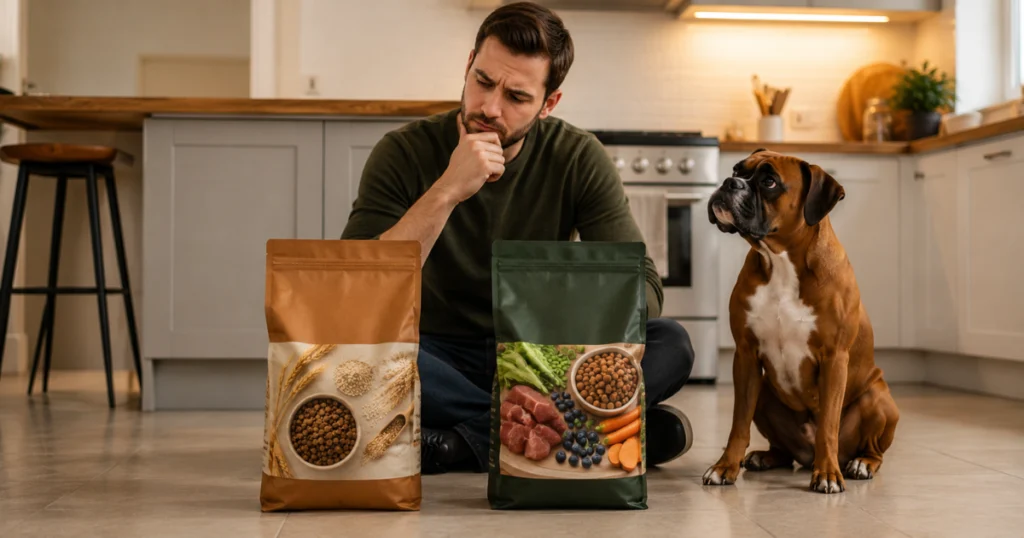
That conversation pushed me into far deeper research than whatever had originally convinced me to go grain free dog food pros and cons. What I found didn’t fit neatly into either “grain-free is natural and superior” or “grain-free will harm your dog.” Here’s the more honest, more complicated version.
What “Grain-Free” Actually Means
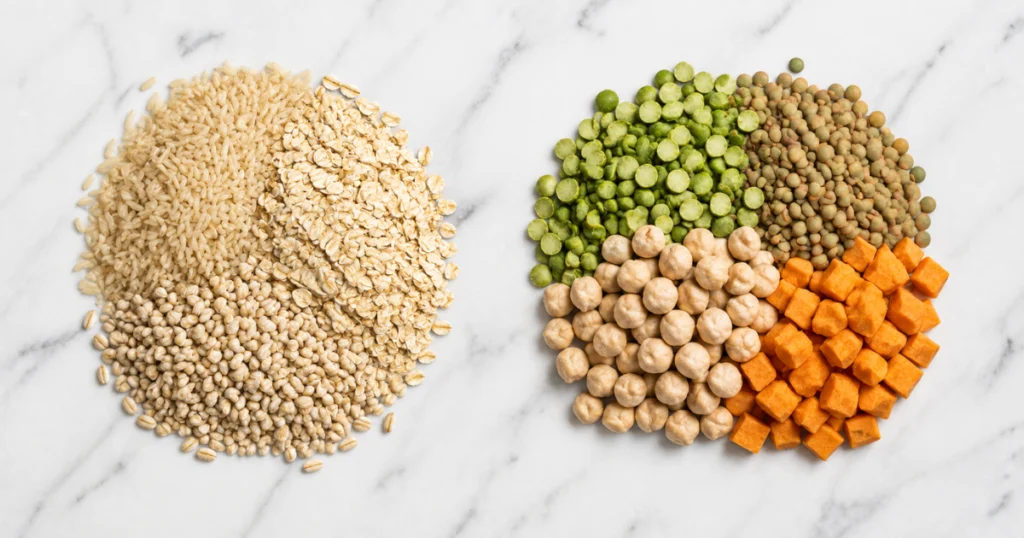
A grain-free dog food simply skips wheat, corn, rice, oats, barley, and other cereal grains. Nothing more, nothing less.
In their place, you’ll almost always find legumes — peas, lentils, chickpeas, potatoes — standing in as the main carbohydrate source, supplying the energy and fiber grains would normally provide.
This is exactly what the marketing tends to skip over. Grain-free isn’t carb-free, and it isn’t low-starch. It’s not a closer match to a wolf’s ancestral diet either — wolves aren’t exactly loading up on lentils in the wild. Grain-free is really just a category defined by removing one ingredient type and swapping in another.
Once you understand what fills the gap when grains disappear, it’s much easier to judge whether a grain-free food is genuinely an upgrade or just a different set of trade-offs.
Why Grain-Free Became So Popular
The trend picked up steam in the late 2000s and hit its peak somewhere around 2015–2018, carried by two overlapping ideas:
The “ancestral diet” story. Dogs came from wolves, so the reasoning goes, they should eat like wolves — heavy on meat, no grains involved. It’s a compelling argument, and it isn’t baseless (dogs are indeed primarily carnivorous), but it glosses over how much dogs have changed nutritionally after thousands of years living alongside people. Unlike wolves, domestic dogs actually carry genetic adaptations for digesting starch. They’re not nutritionally interchangeable animals.
The human gluten-free movement. As gluten sensitivity and celiac disease became household topics, grain-free options exploded across human grocery aisles — and pet food followed the same trajectory. The thinking went: if grains cause trouble for people, why risk feeding them to dogs? It’s intuitive, but the comparison falls apart under scrutiny. Celiac disease doesn’t occur in dogs at all, and true grain sensitivity in dogs is far less common than pet food marketing implies.
Both stories contain a kernel of truth stretched well past what the evidence supports. The upshot was a full-scale industry pivot toward grain-free formulas, steep price premiums, and countless well-intentioned dog owners making a switch that likely did nothing for their pets.
The DCM Investigation: What Actually Happened
In July 2018, the FDA announced it was investigating a possible connection between grain-free diets and dilated cardiomyopathy (DCM) in dogs.

DCM weakens the heart muscle and causes the heart to enlarge, cutting down its ability to pump blood effectively. Certain breeds — Dobermans, Great Danes, Boxers, which explains my vet’s concern about Leo — carry a genetic predisposition to it. But the FDA started seeing cases in breeds with no typical DCM risk, and grain-free, legume-heavy diets kept showing up as the common denominator.
What the investigation found:
- Affected dogs were overwhelmingly eating grain-free diets rich in peas, lentils, and potatoes
- The likely culprit involves taurine — an amino acid essential to heart function that dogs typically produce from other amino acids. Diets heavy in legumes may disrupt taurine synthesis or absorption
- Some dogs’ DCM symptoms improved once they came off grain-free food, were given taurine supplements, or both
What the investigation stopped short of proving:
- A confirmed causal relationship (the correlation is strong, but causation remains unestablished)
- That every grain-free food carries equal risk
- That grain-free is unsafe for every dog
Research on this is ongoing. The FDA hasn’t recalled any products or issued a formal ban. Still, the evidence was compelling enough that most veterinary cardiologists — and a growing number of general practitioners — now urge caution, especially for breeds already prone to heart issues.
This isn’t fringe speculation tucked away in some obscure journal. It’s become standard veterinary guidance.
When Grain-Free Is Actually the Right Choice
None of this means grain-free is wrong across the board. In certain situations, it’s genuinely the better call.
A confirmed grain allergy or sensitivity
Real grain allergies in dogs do exist, though they’re less common than allergies to specific proteins — beef and chicken top the list of actual triggers. If your dog has gone through a proper elimination diet trial and grains were identified as the culprit, grain-free is a legitimate path forward.
Notice the word “confirmed.” Switching to grain-free purely on suspicion, without running an elimination trial, rarely tells you anything useful — and it can trade one problem for another.
A specific grain intolerance
Some dogs struggle with one particular grain (wheat is the usual suspect, more so than rice or oats) without having a full allergy. If your vet has pinpointed a specific grain as the issue after real investigation, cutting that grain out makes sense — though it doesn’t automatically mean cutting out all grains.
A vet’s recommendation tied to a specific condition
Sometimes a vet recommends grain-free for reasons specific to an individual dog’s health picture. That’s precisely the situation grain-free feeding is meant for.
Where grain-free doesn’t make sense:
- Dogs with no identified grain issue, switched over simply because grain-free “sounds healthier”
- Breeds prone to cardiac problems (Boxers, Dobermans, Great Danes, Cocker Spaniels, Golden Retrievers, Irish Wolfhounds) without a specific need and without veterinary input
- Puppies, absent a clear medical reason
Grain-Free Dog Food: Pros and Cons at a Glance
| Pros | Cons | |
| Digestion | Can reduce digestive upset in dogs with confirmed grain sensitivity | No digestive benefit for dogs without grain sensitivity |
| Allergies | Removes grains as a potential allergen from the diet | Doesn’t address protein allergies — the most common trigger |
| Ingredients | Often higher in meat content and whole food carbs like sweet potato | Replaces grains with legumes (peas, lentils) that carry their own concerns |
| Coat & Skin | Some owners report improved coat on grain-free — likely due to higher protein, not grain removal | Same improvement possible with any high-quality high-protein food |
| Heart Health | No benefit — FDA investigation linked high-legume grain-free diets to DCM risk | Elevated DCM risk especially in predisposed breeds |
| Cost | — | Grain-free formulas are typically priced higher than grain-inclusive equivalents |
| Label Clarity | Forces owners to look at ingredient quality more carefully | “Grain-free” label is unregulated — quality varies enormously between brands |
| Weight Management | — | Legume-heavy formulas can be calorie-dense — not ideal for less active dogs |
| Puppies | — | Not recommended for puppies without specific medical reason |
| Availability | Wide range of options across all formats (kibble, wet, raw, freeze-dried) | Higher-quality grain-free options with low legume load are harder to find |
How to Evaluate a Grain-Free Food if You Do Need It
If grain-free is genuinely necessary for your dog, know that not every grain-free formula carries the same level of risk.
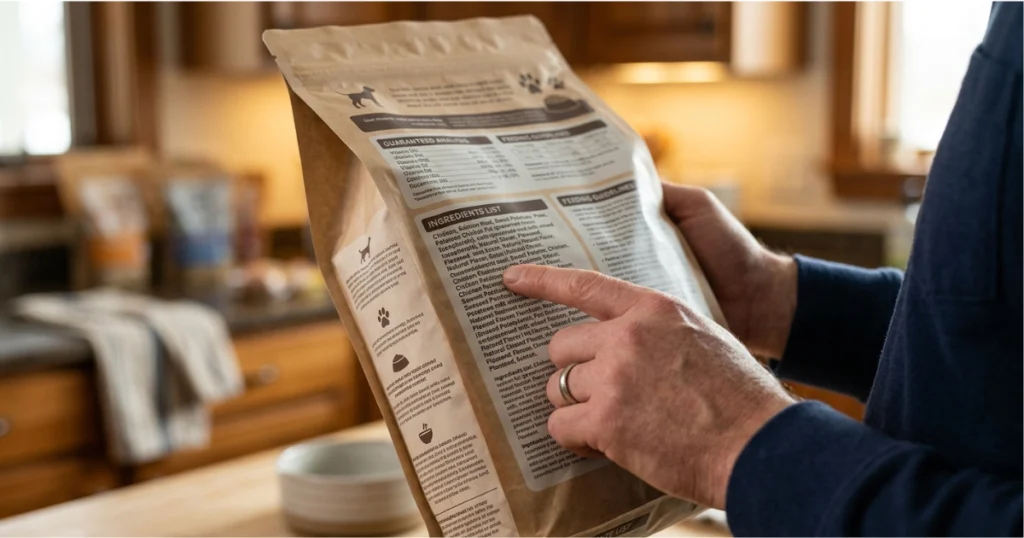
Step 1: Check the legume load
The DCM concern is most tied to formulas where peas, lentils, or chickpeas show up repeatedly in the ingredient list or rank very high (within the top five ingredients) as the primary carb source — sometimes called “legume stacking.”
An ingredient list like chicken, chicken meal, peas, pea protein, lentils, pea fiber, chickpeas is far more legume-dense than one reading chicken, chicken meal, sweet potato, tapioca starch, peas. Count how many legume ingredients appear, and note how high on the list they sit.
Step 2: Look for taurine
Some grain-free brands now supplement their formulas with taurine directly, a response to the DCM findings. It doesn’t erase the concern, but it does signal the manufacturer is paying attention to the research.
Step 3: Weigh the meat content
A grain-free formula where the first three ingredients are all animal proteins is generally a safer bet than one where legumes and protein sources are woven together throughout the list.
Step 4: Consider the manufacturer’s track record
Companies that run actual feeding trials (rather than relying on a “formulated to meet” standard) and employ veterinary nutritionists tend to build formulas that account for taurine and amino acid risks more carefully.
Step 5: Talk to your vet
If your dog has any cardiac predisposition, or you’re sticking with grain-free for a confirmed reason, this conversation is worth having. Some vets now suggest periodic taurine and carnitine blood testing for dogs on long-term grain-free diets.
Grain-Containing Foods Aren’t All Created Equal Either
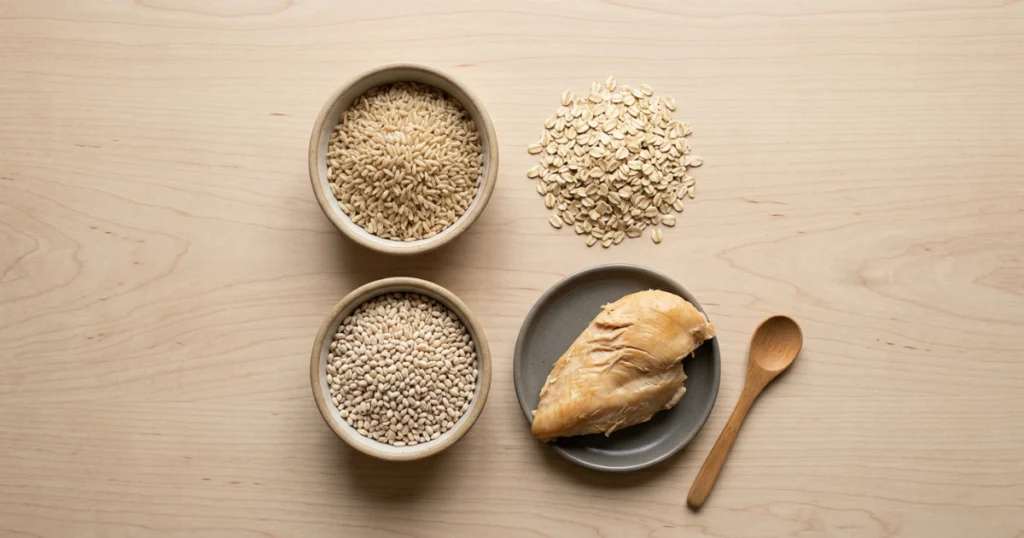
One side effect of the grain-free debate: some owners have swung too far the other way, assuming any food with grain automatically beats any grain-free option. That’s not accurate either.
Grain-inclusive foods span a wide range — from cheap formulas padded with corn syrup and wheat gluten at the bottom, to carefully built recipes featuring brown rice and oats at the top. A well-formulated food with named whole grains (brown rice, oatmeal, barley) in sensible amounts is a completely different product than one using grain purely as cheap filler.
The real question isn’t grain versus grain-free — it’s overall ingredient quality. A well-made grain-inclusive food will typically beat a poorly made grain-free one. Our complete dog nutrition guide breaks down how to judge ingredient quality no matter which category you’re looking at.
What Happened With Leo
Once Leo went back to grain-inclusive food, I chose a formula built around brown rice and oatmeal, high animal protein, and no legume stacking. His coat looked just as good as it had on grain-free. His energy level held steady. If anything, his digestion actually settled down a bit.
His cardiac checkup six months later came back clear.
Would the grain-free food have eventually caused problems? I’ll never really know. But given his breed and the direction the research was pointing, I didn’t feel like finding out was worth it. Grain-free wasn’t giving Leo any real benefit — he never had a grain sensitivity to begin with. So weighing the risk against the (nonexistent) reward made the decision simple.
That calculation looks different for every dog, and it’s one worth working through with your vet based on your own dog’s health history.
Reading Labels: Grain-Free Edition
Whether you’re looking at grain-free or grain-inclusive food, a few label-reading habits are especially useful in the grain-free category.
The words “grain-free” on the front of the bag tell you almost nothing on their own — they describe what’s missing, not what’s actually inside. Two grain-free products can differ enormously in ingredient quality and legume content.
Look for taurine on the ingredient list or in the guaranteed analysis. If it’s absent and the food leans heavily on legumes, a taurine supplement might be worth discussing with your vet.
“Limited ingredient” and “grain-free” aren’t interchangeable. They often overlap, but not always — a limited-ingredient food can still contain grain, and a grain-free food can have a long ingredient list. Don’t assume one implies the other.
Potato tends to be viewed as lower-risk than peas or lentils in the DCM conversation, since potatoes didn’t feature as prominently in the FDA’s case data. If your dog needs grain-free, formulas built around sweet potato or tapioca may carry less risk than legume-heavy alternatives.
If you’re exploring grain-free as part of a broader elimination approach for a sensitive stomach, our best dog food for sensitive stomach guide walks through how to approach that systematically, and our dog food allergies guide explains how to figure out whether grain is really the issue before committing to a long-term grain-free diet.
Common Mistakes Around Grain-Free Feeding

Switching without a real reason. This is the most frequent one. “It sounds healthier” isn’t evidence of anything. Has your dog’s grain sensitivity actually been confirmed? If not, you’re taking on some risk without any real upside.
Assuming every grain-free food carries the same risk. The concern centers specifically on legume-heavy grain-free diets. A grain-free formula built on sweet potato and tapioca, without heavy legume content, isn’t in the same risk category as one dominated by peas and lentils.
Treating grain-free as a permanent upgrade instead of a targeted tool. Even when grain-free suits your dog, it should be a deliberate choice made for a specific reason — not a default “better” category you settle into indefinitely without ever revisiting it.
Skipping cardiac monitoring. If your dog is on grain-free long-term, learn the warning signs of DCM: exercise intolerance, lethargy, coughing, trouble breathing, fainting. They can be easy to miss early on, so annual heart checks are worth bringing up with your vet.
Mixing up grain-free with raw or fresh diets. These are unrelated categories. Grain-free describes a kibble or wet food formulation; raw describes a food format entirely. They don’t carry the same benefits or risks, and one has nothing to do with the other.
Frequently Asked Questions
Is grain-free dog food bad for dogs?
Not as a blanket rule. The real concern is grain-free diets heavy in legumes (peas, lentils, chickpeas) and their possible link to dilated cardiomyopathy. Most healthy dogs without a grain sensitivity do fine on grain-inclusive food from quality ingredients — and it may actually carry less risk than many grain-free alternatives.
My dog has been on grain-free for years with no symptoms. Should I switch?
That’s a conversation worth having with your vet, particularly if your dog belongs to a cardiac-predisposed breed. DCM can develop quietly for a while before symptoms show up. Without a specific need for grain-free, switching to a quality grain-inclusive food is a reasonable precaution. If there’s a confirmed grain sensitivity, the calculation changes.
What’s the link between grain-free food and heart disease?
The FDA’s investigation found higher-than-expected DCM rates among dogs eating grain-free, legume-heavy diets. The suspected mechanism involves taurine, an amino acid critical to heart muscle function that dogs normally make on their own. Heavy legume intake may interfere with that process. The connection is associative rather than proven causal, but strong enough to take seriously.
Which dog breeds are most at risk from grain-free diets?
Breeds already genetically prone to DCM face the highest overall risk: Doberman Pinschers, Boxers, Great Danes, Cocker Spaniels, Irish Wolfhounds, Newfoundlands, and Golden Retrievers. What made the FDA’s findings notable was that cases also turned up in breeds without a typical predisposition.
Are peas and lentils bad for dogs?
Not inherently — they offer fiber and some protein value. The issue arises specifically when peas and lentils appear repeatedly throughout an ingredient list and function as the main carbohydrate source, effectively replacing grain in large amounts. Moderate or occasional legume content isn’t the same concern as a legume-dominant formula.
How do I know if my dog actually needs grain-free food?
The reliable method is a proper elimination diet trial run over 8–12 weeks, using a novel protein and carbohydrate with no other ingredients mixed in. If symptoms like itching, digestive upset, or ear infections clear up during the trial and return once grains are reintroduced, that confirms a grain sensitivity. Our dog food allergies guide walks through the full process.
Is sweet potato a safer grain-free carb than peas and lentils?
Current research suggests yes. The FDA’s cases leaned more heavily toward pea- and lentil-based diets than sweet potato or tapioca-based ones. If your dog genuinely needs grain-free food, sweet potato and tapioca formulas are generally viewed as the lower-risk option compared to legume-dominant recipes.
Should I add taurine supplements if I’m feeding grain-free?
Worth raising with your vet. Some grain-free manufacturers already build supplemental taurine into their formulas. For dogs on long-term grain-free diets — cardiac-predisposed breeds especially — periodic taurine and carnitine blood testing is sometimes recommended. Don’t add isolated amino acid supplements on your own, since doing so alongside an already-complete commercial diet can throw off the balance.
Is grain-free okay for puppies?
Most veterinary nutritionists advise against grain-free for puppies unless there’s a specific medical reason. A puppy’s cardiac system is still developing, and the risk-benefit trade-off during that critical growth window doesn’t favor grain-free feeding without clear justification.
My vet recommended grain-free. Should I follow that advice?
Yes. If your vet made that call based on your dog’s individual health profile, that guidance should be followed. Vet-recommended grain-free tied to a specific diagnosis or sensitivity is exactly what this kind of diet is meant for. The caution discussed here applies to dogs switched to grain-free without a clear reason — not dogs on it as part of a vet-supervised plan.
Where I Landed

Leo has been eating grain-inclusive food for about 18 months now — brown rice, oatmeal, and a high proportion of chicken and turkey protein. His coat looks great, his energy is solid, and his most recent cardiac checkup came back clear.
Was putting him on grain-free for two years a mistake? Probably. Nothing bad came of it, but given his breed and where the research points, I was taking on risk for no actual benefit, since Leo never had a grain sensitivity in the first place.
That’s the honest takeaway on grain-free for most dogs: a marketing story that took a real but narrow concern (genuine grain allergy) and stretched it to apply to every dog, while quietly introducing a different risk along the way.
If your dog has a confirmed grain sensitivity, a thoughtfully managed grain-free diet is a legitimate option. If not, a high-quality grain-inclusive food is the lower-risk, evidence-backed choice.
For the complete picture on evaluating any dog food — grain-free or not — our complete dog nutrition guide covers ingredient quality, label reading, and how to make decisions based on your dog’s actual needs rather than marketing trends.