I’ve been feeding dogs wrong for years without knowing it.
Not dramatically wrong — my dogs weren’t sick. But I was making the same quiet mistakes millions of dog owners make: trusting the front of the bag more than the ingredient list, not adjusting portions as my dog aged, assuming “premium” meant something legally, and thinking the feeding schedule didn’t really matter as long as food went in the bowl at some point during the day.
It took a vet visit that turned into a 40-minute nutrition conversation to realize how much I didn’t know about something I was doing twice a day, every day.
This guide is everything from that conversation — and everything I’ve learned since. Whether you’re feeding a new puppy, managing a dog with a sensitive stomach, navigating a senior dog’s changing needs, or just trying to figure out if what’s in the bag is actually any good — this is the foundation.
Why Dog Nutrition Is More Complicated Than It Looks
Walk into any pet store and you’ll find hundreds of dog foods, each claiming to be the best. “Natural.” “Premium.” “Holistic.” “Vet-recommended.” None of these words have a regulated legal definition in pet food. They tell you about the marketing budget, not the nutrition.
The dog food industry generates over $50 billion annually in the US alone. That money funds a lot of packaging design and very little of it filters down to what’s actually in the bowl.
The result is that most dog owners are genuinely confused — not because they don’t care, but because the information environment is designed to confuse. Understanding the basics of canine nutrition isn’t complicated once someone explains it clearly. That’s what this guide is for.
The 6 Essential Nutrients Every Dog Needs

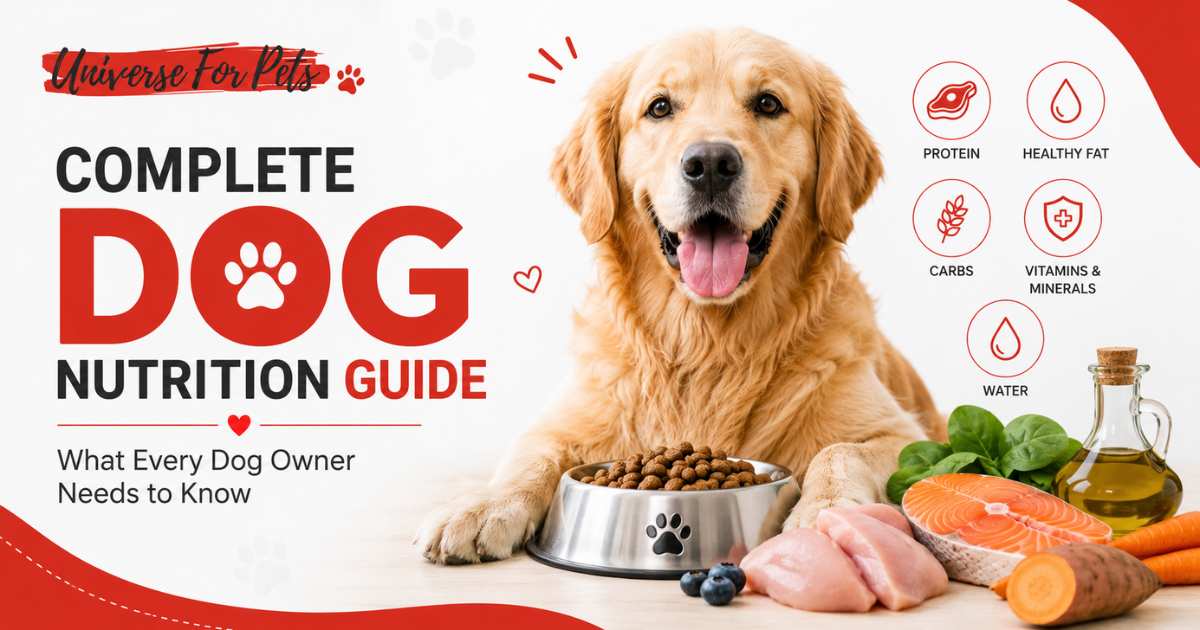
Every dog’s diet needs to deliver six things: protein, fat, carbohydrates, vitamins, minerals, and water. Getting even one wrong — even with otherwise quality ingredients — affects everything else.
Protein: The Foundation of Everything
Protein is the most important macronutrient for dogs. It builds and repairs muscle, skin, coat, organs, and supports immune function. Every enzyme and hormone in your dog’s body is made of protein.
Minimum requirements:
- Adult dogs: 18% protein (dry matter basis)
- Puppies and pregnant/nursing dogs: 22–28%
- Senior dogs: 25–28% (higher than most people think — more on this below)
- Working and highly active dogs: 25–35%
Quality matters as much as quantity. Animal-based proteins — chicken, beef, fish, lamb, eggs — are more bioavailable to dogs than plant proteins. A food listing “pea protein” or “soy protein” as primary protein sources is cutting corners nutritionally even if the total protein percentage looks high on the label.
Fat: Energy, Brain Function, and Coat Health
Fat is the most calorie-dense nutrient and the primary energy source for dogs. It also carries fat-soluble vitamins (A, D, E, and K) and supports brain function, skin integrity, and coat condition through omega fatty acids.
Minimum requirements:
- Adult dogs: 5.5% fat (dry matter basis)
- Puppies: 8% minimum
- Active or working dogs: up to 20%
The type of fat matters. Omega-3 fatty acids (from fish oil, flaxseed, salmon) reduce inflammation, support joint health, and contribute to a shiny coat. Omega-6 fatty acids (from poultry fat, vegetable oils) support skin barrier function. The balance between them matters — modern commercial diets are often omega-6 heavy. Adding a fish oil supplement is one of the most straightforward nutritional improvements most owners can make.
Carbohydrates: Energy and Fiber
Carbohydrates aren’t technically essential for dogs the way protein and fat are — dogs can theoretically survive without them. In practice, they’re a useful energy source and the primary vehicle for dietary fiber.
Quality carb sources: sweet potato, brown rice, oats, pumpkin, barley, peas Lower quality fillers: corn syrup, wheat gluten, white flour, excessive starchy fillers
Fiber from carbohydrate sources supports gut motility, healthy gut bacteria, and weight management by increasing satiety without adding significant calories. For dogs with digestive issues, fiber source and quality makes a noticeable difference — more on this in our best dog food for sensitive stomach guide.
Vitamins: The Regulators
Dogs need 12 essential vitamins, divided into fat-soluble (A, D, E, K) and water-soluble (C and the B vitamins). Each plays specific regulatory roles:
- Vitamin A: vision, immune function, skin health
- Vitamin D: calcium regulation, bone health (dogs can’t synthesize it from sunlight efficiently)
- Vitamin E: antioxidant, immune support
- B vitamins: energy metabolism, nervous system function
- Vitamin C: dogs synthesize their own, but additional amounts support immune function during stress
Most commercial diets add synthetic vitamins to meet requirements. Whole food ingredients contribute natural vitamin sources that are generally better absorbed — another reason ingredient quality matters beyond just protein and fat numbers.
Minerals: Structure and Function
Key minerals for dogs include calcium, phosphorus, potassium, sodium, magnesium, and trace minerals like zinc, iron, copper, and selenium.
Calcium and phosphorus are the most critical to get right — and the hardest for homemade diet makers to balance. The ratio should be approximately 1.2:1 calcium to phosphorus. Too much calcium during puppyhood (especially in large breeds) is linked to developmental bone problems. Too little leads to weakened bones in adult dogs. This is the single most common nutritional error in unformulated homemade diets.
Water: The Most Overlooked Nutrient
Dogs need approximately 1 ounce of water per pound of body weight per day under normal conditions — more in heat, during exercise, or if fed primarily dry food. Chronic mild dehydration is common in dogs fed only dry kibble and is linked to urinary issues and kidney stress over time.
Adding water to kibble, feeding wet food as part of the diet, or simply ensuring clean fresh water is always available are all simple ways to support hydration. Senior dogs and dogs with kidney conditions need particular attention here.
How to Read a Dog Food Label: What Actually Matters
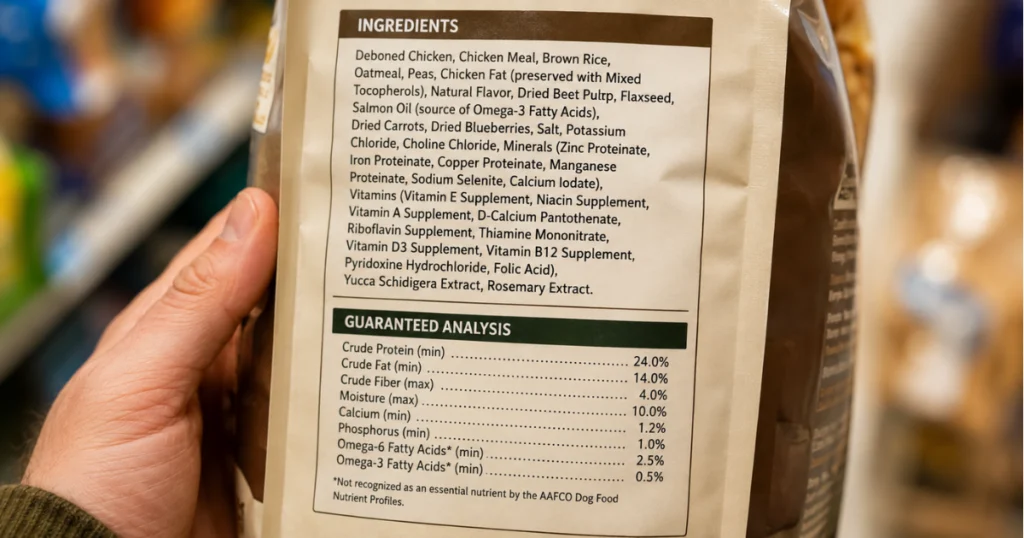
Pet food labels are designed to be misread. Here’s how to read them correctly.
The AAFCO Statement
This is the single most important thing on the label and most owners walk past it. Look for small text that reads something like:
“[Product name] is formulated to meet the nutritional levels established by the AAFCO Dog Food Nutrient Profiles for [life stage].”
This tells you two things: the food meets minimum nutritional standards (not guaranteed, but a baseline), and which life stage it’s formulated for. “Adult maintenance” means it’s not designed for puppies or pregnant dogs. “All life stages” means it meets puppy requirements — which also means it may have more calories than an adult or senior dog needs.
The Ingredient List
Ingredients are listed in descending order by weight before cooking. This creates a common source of confusion: water-heavy ingredients like fresh meat rank higher pre-cooking but represent less of the finished dry product than they appear to.
What to look for:
- Named animal protein as the first ingredient: “chicken,” “salmon,” “beef,” “turkey” — not “poultry by-product” or “meat meal” of unspecified origin
- Named meat meals (e.g., “chicken meal”) are actually more concentrated protein than whole fresh meat listed first — the water has already been removed
- Whole food carbohydrate sources in the middle of the list
- Named fat sources: “chicken fat,” “salmon oil” — not just “animal fat”
What to avoid:
- Artificial preservatives: BHA, BHT, ethoxyquin
- Artificial colors: Red 40, Yellow 5, Blue 2 — they add nothing nutritionally
- “Meat by-products” of unspecified species
- Multiple forms of the same cheap ingredient listed separately to make it appear lower on the list (e.g., “ground corn,” “corn gluten meal,” “corn syrup” — all corn, all filler)
The Guaranteed Analysis Panel
This panel shows minimum protein and fat percentages and maximum fiber and moisture percentages. It’s the closest thing to a nutrition facts panel that dog food has.
Important: guaranteed analysis numbers are given on an “as fed” basis, which includes the food’s moisture content. To compare a wet food to a dry food, you need to convert both to “dry matter basis.” This is why a wet food showing 8% protein isn’t directly comparable to a dry food showing 28% protein — the dry food has far less water.
The Ingredient List vs. The Guaranteed Analysis
These tell you different things and both matter. The ingredient list tells you what’s in the food. The guaranteed analysis tells you how much of the key nutrients are present. A food can have chicken as the first ingredient but still have a low protein percentage if the formula is filler-heavy. Read both.
Dog Nutrition by Life Stage

Nutritional needs shift significantly across a dog’s life. Feeding a 3-year-old dog the same diet as a 10-year-old is one of the most common and most correctable nutritional mistakes.
Puppies: High Everything
Puppies need roughly twice the calories per pound of body weight compared to adult dogs of the same breed. Every system in their body is developing simultaneously — bones, muscles, organs, immune system, brain. The nutritional demands are enormous.
Key puppy nutrition rules:
Large breed puppies need large breed puppy food. This is the most important breed-specific nutrition rule. Large breed formulas have controlled calcium and phosphorus levels — critical because too much calcium too fast during rapid growth is linked to developmental orthopedic disease (DOD). A Golden Retriever puppy on small breed puppy food is getting calcium levels designed for a Chihuahua’s growth rate. This matters.
Feeding frequency matters. Puppies need 3–4 meals per day in their early months to maintain blood sugar stability and support their small stomach capacity. Our puppy feeding schedule guide breaks this down week by week — including exactly when to drop from 4 meals to 3 to 2, and how to do the transition without digestive upset.
Don’t switch to adult food too early. Puppies of most breeds should stay on puppy formula until 12 months. Large breeds until 18 months. Giant breeds (Great Danes, Mastiffs, Saint Bernards) until 24 months. Growth plates close later in bigger dogs — they need puppy-level nutrition until that process completes.
For small and toy breed puppies specifically, our best puppy food for small breeds guide covers the additional nuances — including the hypoglycemia risk that’s specific to very small puppies and how to manage it through feeding frequency.
Adult Dogs: Maintenance and Stability
The adult phase (generally 1–7 years, earlier for giant breeds) is about maintaining optimal body condition — not gaining, not losing, sustaining energy, and supporting all body systems.
Protein: 18–25% on a dry matter basis, scaled to activity level Fat: 10–15% for most dogs, more for working dogs Calories: Calculated from feeding guide as a starting point, then adjusted based on body condition
Body condition scoring is the most practical tool for getting adult dog portions right. On a scale of 1–9:
- Score 4–5 is ideal: ribs easily felt but not visible, visible waist from above, slight abdominal tuck from the side
- Score 6–7: overweight, reduce by 10–15%
- Score 3 or below: underweight, increase protein especially
The feeding guide on packaging is a starting point, not a rule. It’s calculated for an average dog and often overestimates real-world needs for sedentary or neutered dogs.
Senior Dogs: The Most Misunderstood Life Stage

Senior nutrition is where the most myths live. The biggest one: senior dogs need less protein.
The opposite is true. Aging dogs become less efficient at metabolizing protein, which means they need more dietary protein to maintain the same muscle mass — not less. Age-related muscle loss (sarcopenia) is one of the most preventable problems in senior dogs, and low-protein “senior” formulas are often the culprit.
Senior nutrition priorities:
- Protein UP: 25–28% minimum, from quality animal sources
- Calories DOWN: 20–30% reduction for most sedentary seniors
- Fiber UP: aging gut motility slows; more fiber supports consistency
- Joint support added: glucosamine, chondroitin, omega-3s become essential rather than optional
- Antioxidants: support cognitive function and immune response in aging dogs
The word “senior” on a dog food label is unregulated — some senior formulas genuinely address these needs, others are rebranded adult food. Always check the actual protein percentage and ingredient list, not just the life stage claim.
Our full best food for senior dogs guide covers when to make the switch (it varies significantly by breed size), how to assess whether the current food is actually working, and what a proper senior transition looks like.
Types of Dog Food: Comparing Your Options
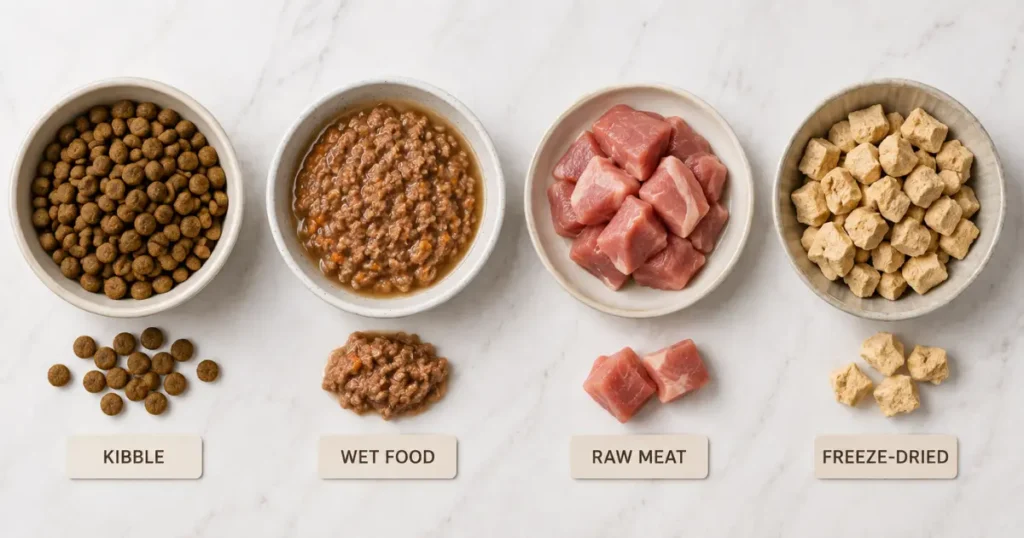
The format of food matters as much as what’s in it for many dogs.
Dry Kibble
The most common choice — practical, affordable, long shelf life, and most dogs eat it without issue. Quality varies enormously across price points. The processing involved in making kibble (extrusion at high heat) can degrade heat-sensitive nutrients, which is why reputable manufacturers add them back post-processing.
Best for: most dogs, busy owners, budget-conscious feeding, dental health benefit from the abrasion
Wet/Canned Food
Higher moisture content (75–85%) means better hydration support. More palatable for picky eaters, older dogs with dental issues, or dogs recovering from illness. More expensive per calorie than kibble and doesn’t provide the dental benefit.
Best for: senior dogs, picky eaters, dogs with urinary or kidney concerns, short-term recovery
Raw Food Diet (BARF)
Biologically Appropriate Raw Food — uncooked meat, bones, organs, and vegetables. Proponents cite shinier coats, better digestion, and higher energy. Critics (including most veterinary organizations) flag bacterial contamination risk (Salmonella, E. coli, Listeria — affecting both dogs and humans handling the food) and nutritional imbalance in unformulated raw diets.
Raw feeding can work well with proper preparation and formulation, but it requires significantly more knowledge and handling discipline than commercial feeding. Our raw dog food diet guide covers the full picture — the genuine benefits, the real risks, and the protocol for doing it safely if you decide it’s the right fit.
Freeze-Dried and Dehydrated Food
A middle ground — raw or minimally processed ingredients with moisture removed for shelf stability. Rehydrated before serving. Nutritional profile is closer to raw than to kibble. More expensive than both. Growing in popularity among owners who want minimally processed food without the bacterial handling risks of raw.
Best for: owners who want raw-adjacent nutrition with more convenience
Homemade Food
Maximum ingredient control — critical for dogs with multiple allergies, complex sensitivities, or owners who want complete transparency about what goes into every meal. The risk is nutritional incompleteness, particularly calcium/phosphorus balance and micronutrients that are easy to overlook.
Our homemade dog food recipes are built with nutritional balance in mind — but any long-term homemade diet benefits from a vet or veterinary nutritionist review, especially for puppies, pregnant dogs, and seniors.
Breed and Size-Specific Nutrition Differences

One diet does not fit all dogs. Size, breed, and activity level create meaningful nutritional differences.
Small and Toy Breeds (Under 20 lbs)
Higher metabolic rate means more calories per pound of body weight. Small breed foods are typically more calorie-dense to accommodate this without requiring impractical meal volumes. Small breed puppies are also more susceptible to hypoglycemia — low blood sugar from skipping meals — which is why feeding frequency is particularly important in the early months.
Medium Breeds (20–50 lbs)
The “standard” most feeding guidelines are written for. Medium breed dogs are the least likely to have breed-specific nutritional complications, though individual variation still matters.
Large Breeds (50–90 lbs)
Slower growth rate during puppyhood means controlled calcium intake is critical. As adults, large breeds benefit from joint-supporting nutrients earlier than smaller breeds — the physical demands of their size accumulate over time. Senior transitions should begin earlier (around 7 years vs 10+ for small breeds).
Giant Breeds (90 lbs+)
The most nutritionally complex category. Developmental orthopedic disease risk during puppyhood is highest in giant breeds — the growth window is longer and the consequences of nutritional error are more severe. As adults and seniors, joint health, cardiac health, and bloat prevention (feeding frequency, avoiding exercise around meals) all require specific attention.
Working and Highly Active Dogs
Calorie and protein needs can be 20–50% higher than a sedentary dog of the same breed. Fat percentage typically increases significantly for dogs doing sustained physical work (sled dogs, hunting dogs, agility competitors). Standard feeding guides massively underestimate the needs of genuinely high-activity dogs.
Human Foods: What’s Safe and What’s an Emergency
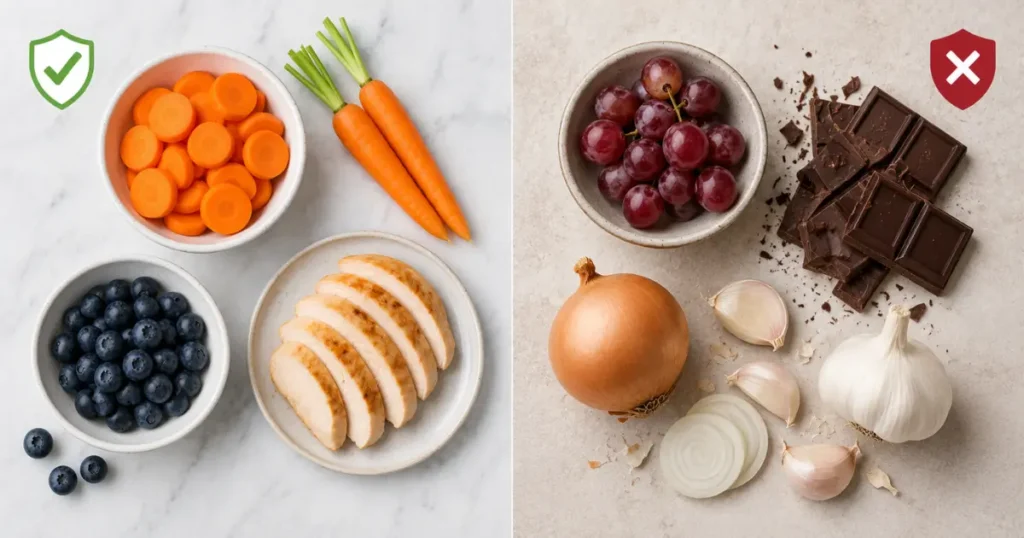
This is one of the most practically important sections of this guide because the consequences of getting it wrong are immediate.
Genuinely dangerous — emergency situations:
- Grapes and raisins: can cause acute kidney failure with no established safe dose — even one grape warrants a vet call
- Xylitol: artificial sweetener in sugar-free gum, some peanut butters, yogurts, and vitamins — causes rapid blood sugar drop and liver failure
- Chocolate: theobromine toxicity — dark and baking chocolate most dangerous
- Onions, garlic, leeks, chives: damage red blood cells causing hemolytic anemia — cooked and powdered forms equally toxic
- Macadamia nuts: cause weakness, vomiting, tremors
- Cooked bones: splinter into sharp shards that can puncture the digestive tract
- Raw yeast dough: ferments in the stomach, producing alcohol and causing dangerous bloating
Safe and genuinely nutritious: Blueberries, watermelon (seedless), cooked chicken, cooked salmon, plain cooked rice, sweet potato, carrots, eggs (cooked), plain pumpkin, apples (no core or seeds), green beans, plain yogurt (xylitol-free)
If your dog eats something dangerous: call the ASPCA Animal Poison Control Center (888-426-4435) immediately — don’t wait for symptoms for high-risk foods like grapes or xylitol. Our full guide to human foods dogs can and cannot eat covers every food category with detailed explanations and emergency protocols.
Dog Food Allergies and Sensitivities

The two most common food-related health problems in dogs aren’t deficiencies — they’re intolerances and allergies. And the most common symptom of both isn’t digestive upset. It’s skin and ear problems.
Food Intolerance
A digestive issue — the gut struggles to process a specific ingredient. Typical symptoms: gas, loose stool, vomiting, general stomach upset. More common than true allergies.
Food Allergy
An immune system response to a specific protein. The most common symptoms are chronic itching, recurrent ear infections, paw licking, and skin inflammation — often with minimal digestive involvement. This is why food allergies get missed for months: owners and sometimes vets look for stomach symptoms and don’t find them.
Most common food allergens in dogs (in rough order of frequency):
- Beef
- Chicken
- Dairy
- Wheat
- Egg
- Soy
Notice that the top two are the proteins in the majority of mainstream dog foods. Allergies develop through repeated exposure — a dog that’s eaten chicken its whole life is more likely to develop a chicken allergy than one that’s had it occasionally.
Managing food sensitivities: Limited ingredient diets, novel proteins (proteins the dog has never eaten before), and elimination diet trials are the evidence-based approaches. Our best dog food for sensitive stomach guide covers practical management for digestive sensitivities, and our dog food allergies guide walks through the full elimination diet process and how to identify specific triggers.
Grain-Free Dog Food: What the Science Actually Says
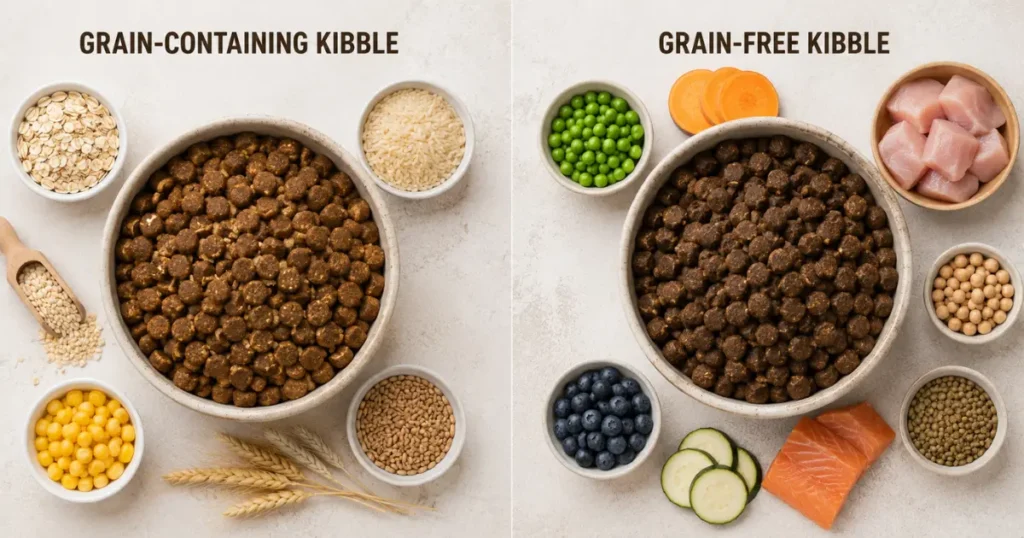
Grain-free dog food became enormously popular in the 2010s on the logic that grains are unnatural for dogs. The reality is more complicated.
The DCM concern: In 2018, the FDA began investigating a potential link between grain-free diets and dilated cardiomyopathy (DCM) — a serious heart condition — in dogs. The investigation focused specifically on diets high in legumes (peas, lentils, chickpeas) as primary ingredients, which are common in grain-free formulas as carbohydrate replacements. The mechanism isn’t fully understood, but the association was strong enough to generate ongoing research.
What this means practically:
- Grain-free is not inherently better for dogs without a diagnosed grain sensitivity or allergy
- Grains are a digestible energy source for most dogs and not the cause of most food problems
- The proteins and legume levels in grain-free formulas are more relevant concerns than the grain-free label itself
When grain-free is genuinely appropriate:
- Diagnosed grain allergy confirmed through elimination diet
- Documented sensitivity to specific grains
For the full breakdown of the research, what the FDA investigation concluded, and how to evaluate whether grain-free is the right choice for your specific dog, our grain-free dog food pros and cons guide covers it in depth.
Supplements: When They’re Worth It
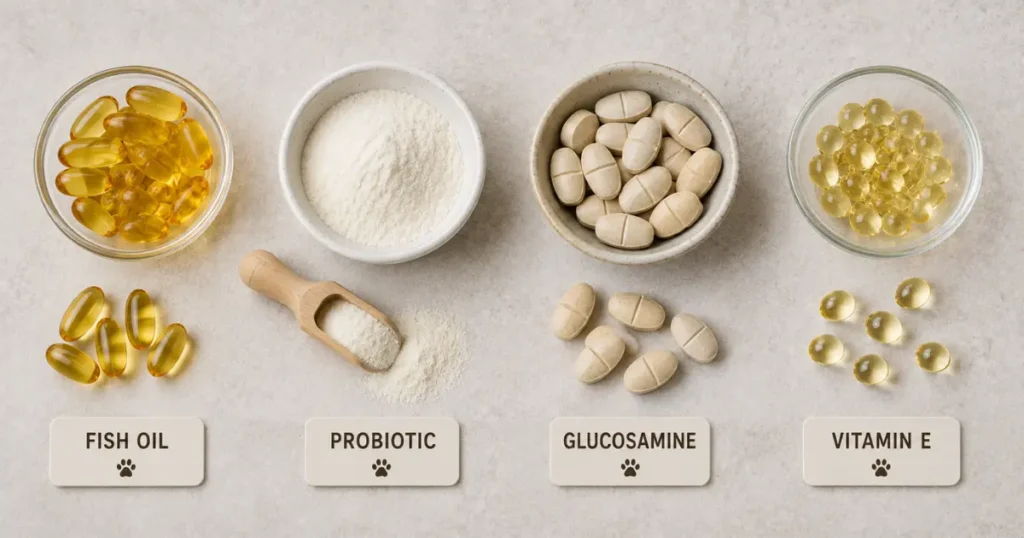
Most dogs on a complete, balanced commercial diet don’t need supplements. But several are broadly beneficial enough to be worth considering for specific situations.
Omega-3 Fatty Acids (Fish Oil)
The most universally useful dog supplement. Supports joint health, reduces inflammation, improves coat and skin condition, and supports cognitive function in senior dogs. Most commercial diets are omega-6 heavy and omega-3 light — fish oil corrects this balance.
Dose: approximately 20mg EPA+DHA per pound of body weight daily Source: fish oil or algae-based omega-3 (for dogs with fish allergies)
Probiotics
Support gut microbiome health, particularly valuable during antibiotic treatment (which disrupts gut bacteria), after illness, during food transitions, and for dogs with chronic digestive issues. Look for multi-strain products with at least 1 billion CFU per dose.
Glucosamine and Chondroitin
Support cartilage health and joint function. Valuable for large breeds from middle age, senior dogs of all breeds, and dogs with diagnosed joint issues. Effective doses: 500mg+ glucosamine per serving. Some senior dog foods include therapeutic levels — check the guaranteed analysis.
Vitamin E
Antioxidant support, particularly for senior dogs and those with immune challenges. Often adequate in commercial diets but worth supplementing for seniors on homemade food.
What Not to Over-Supplement
More is not better with fat-soluble vitamins (A, D, E, K) — these accumulate in body fat and can reach toxic levels. Never supplement fat-soluble vitamins without a specific deficiency diagnosis from a vet.
Hydration: The Nutrient Nobody Talks About

Water is the most essential nutrient and the most overlooked one. Chronic mild dehydration in dogs fed exclusively dry food is more common than most owners realize and contributes to urinary crystals, kidney stress, and constipation over time.
Signs of dehydration in dogs:
- Dry, sticky gums (should be moist and slick)
- Skin tent test: pinch the skin at the back of the neck — it should snap back immediately. Slow return indicates dehydration
- Lethargy and reduced appetite
- Dark, strong-smelling urine
Practical ways to increase water intake:
- Add warm water to kibble at mealtimes
- Add a splash of low-sodium bone broth to the water bowl
- Use a pet fountain — many dogs drink more from moving water
- Incorporate wet food as part of the diet
- Multiple water stations around the house
Daily water requirement: approximately 1 ounce per pound of body weight, more in heat and after exercise.
Common Dog Nutrition Mistakes

The most impactful nutrition improvements most owners can make aren’t about finding a better food — they’re about correcting common habits.
1. Overfeeding table scraps A cube of cheese for a 10kg dog is the caloric equivalent of a human eating a cheeseburger as a snack. Table scraps add up invisibly. Not all of them are harmless — our complete guide to human foods dogs can and cannot eat covers what crosses from “unhealthy” into “toxic.”
2. Free feeding instead of portioning Leaving food out all day makes overeating invisible. It also wrecks potty training in puppies and prevents you from noticing appetite changes that often signal health issues.
3. Not adjusting portions after spay/neuter Metabolism drops after the procedure. Many dogs gain significant weight in the months following because feeding stays the same. Reduce by 10–15% post-surgery and monitor body condition.
4. Switching foods too fast Abrupt food changes cause digestive upset that gets blamed on the new food. Transition over 7–10 days minimum. 14 days for sensitive stomachs.
5. Assuming grain-free means healthier Without a specific grain sensitivity, grain-free offers no benefit and may introduce legume-related cardiac risk. The front-of-bag claim isn’t a nutritional credential. Before making the switch, read our grain-free dog food pros and cons guide.
6. Ignoring food sensitivity signs Chronic itching, ear infections, and soft stool are often diet-related. If your dog is stuck in a loop of recurring symptoms and treatments that work temporarily, food investigation is worth doing. Our dog food allergies guide explains how to investigate properly.
7. Not updating portions as the dog ages A portion set at 2 years is wrong by 8 years. Metabolism, activity, and nutritional needs all shift. Reassess annually at minimum, with each vet visit as a prompt.
Homemade vs. Commercial Dog Food
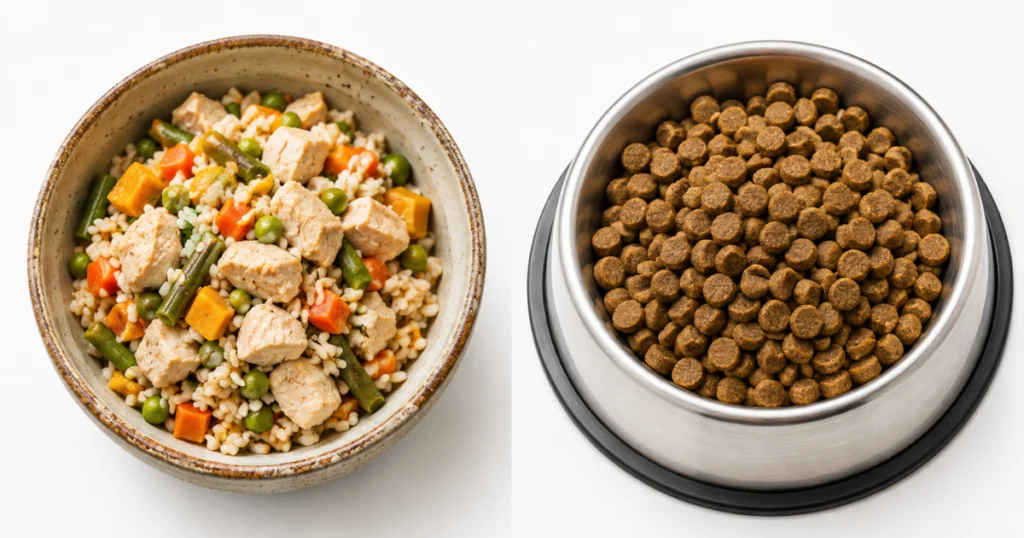
This is genuinely an either/or decision for many owners, and the right answer depends on your dog’s specific needs and your realistic capacity to manage it.
Commercial food’s core advantage is formulation certainty. A food with an AAFCO complete and balanced statement has been calculated to meet established nutritional requirements. For a healthy adult dog without specific issues, a high-quality commercial food is the lowest-effort, lowest-risk nutritional foundation.
Homemade food’s core advantage is ingredient transparency and control — essential for dogs with complex allergies, multiple sensitivities, or owners who want to know exactly what goes into every meal. The healthiest dog foods we’ve reviewed represent the best of commercial options. But when those options aren’t working, homemade gives you a clean slate.
The practical middle path: many owners use a high-quality commercial base with homemade meals rotated in for variety — or use whole food toppers (cooked chicken, an egg, steamed vegetables) to improve palatability and nutritional variety without going fully homemade. Our homemade dog food recipes work well as a supplement to commercial food or as a full diet with appropriate professional guidance.
The critical caveat for homemade: calcium and phosphorus balance is hard to get right without formulation help. Long-term homemade diets — especially for puppies, pregnant dogs, and seniors — should be reviewed by a vet or veterinary nutritionist. The consequences of imbalance accumulate silently.
Feeding Guidelines and Portion Control

There’s no universal chart that works for every dog. Breed, age, activity level, reproductive status, metabolism, and individual variation all affect the right portion. Here’s how to find the right number for your dog:
Step 1: Start with the packaging guide Use the chart on your specific food’s packaging based on your dog’s current weight. This is a starting point — often 10–20% more than your dog actually needs, because manufacturers have an interest in the food being used quickly.
Step 2: Calculate meals
- Puppies 8–12 weeks: divide daily amount by 4
- Puppies 3–6 months: divide by 3
- Dogs 6 months+: divide by 2
- Senior dogs with digestive issues: consider 3 smaller meals
Step 3: Check body condition monthly This is the most reliable long-term calibration tool. See the body condition scoring system described in the life stages section above. Adjust by 10% at a time and wait 3 weeks before adjusting again.
Step 4: Treat math Treats should stay under 10% of total daily calories. If you’re using treats heavily during training, reduce the base meal portion proportionally. This is where most owners’ “but I’m feeding the right amount” calculations fall apart.
Step 5: Reassess after any major change Spay/neuter, season changes affecting activity, aging, illness, new medication — all of these can shift caloric needs meaningfully. Reassess whenever something significant changes.
Raw Dog Food: What You Need to Know
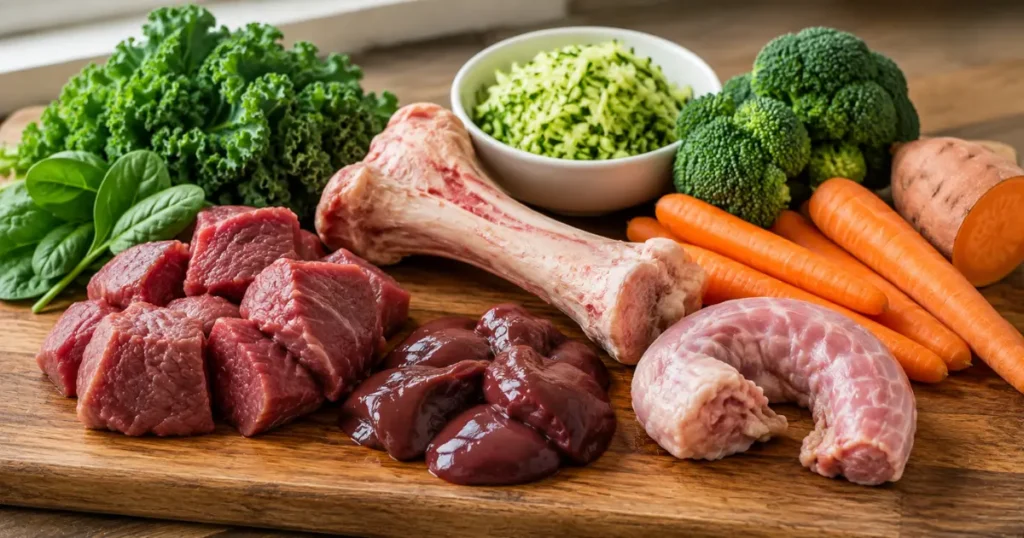
Raw feeding has grown significantly in popularity and the conversation around it is often more heated than it needs to be. The reality sits somewhere between “raw is the natural optimal diet” and “raw is dangerous and irresponsible.”
What the evidence supports:
- Raw diets, when properly formulated, can meet dogs’ nutritional needs
- Many owners report genuine improvements in coat quality, digestion, and energy
- Dogs have stronger stomach acid than humans and can handle some bacterial load that would make humans sick
What the evidence also supports:
- Raw meat can carry Salmonella, E. coli, Listeria, and other pathogens — risks for both dogs and humans handling the food
- Poorly formulated raw diets (common in home-prepared versions) frequently have calcium/phosphorus imbalances, excess organ meat, and micronutrient gaps
- Raw bones carry fracture and obstruction risk when sized or prepared incorrectly
If you’re considering raw feeding: start with our raw dog food diet guide which covers formulation basics, safe handling protocols, how to evaluate commercial raw options vs. home-prepared, and how to tell whether your dog is actually thriving on it.
Frequently Asked Questions
How do I know if my dog’s food is nutritionally complete?
Look for the AAFCO statement on the packaging — specifically the phrase “complete and balanced” for the appropriate life stage. This means the food meets established minimum nutritional standards. It’s not a guarantee of optimal nutrition, but it’s the baseline signal that the food isn’t nutritionally incomplete.
What’s the best dog food?
There’s no single best food — the right food depends on your dog’s age, breed size, activity level, health status, and any specific sensitivities. A food that’s excellent for a healthy 3-year-old medium-breed dog may be wrong for a senior large-breed dog with joint issues. Focus on appropriate life stage, quality protein sources, AAFCO statement, and your individual dog’s response.
How often should I feed my dog?
Puppies 8–12 weeks: 4 times daily. Puppies 3–6 months: 3 times daily. Dogs 6 months and older: twice daily. Senior dogs with digestive issues sometimes benefit from 3 smaller meals. Adult dogs fed once a day are at higher bloat risk, particularly large and giant breeds.
Is grain-free dog food better?
Not by default. For dogs without a diagnosed grain sensitivity or allergy, grain-free offers no proven benefit. The FDA has also investigated a potential link between high-legume grain-free diets and dilated cardiomyopathy in dogs. Grain-free should be a response to a specific health need, not a default upgrade.
Can I feed my dog the same food forever?
The food may be fine long-term, but the portion needs to change as your dog ages. Nutritional needs shift between puppyhood, adulthood, and senior years. A diet that’s appropriate at 2 years needs reassessment by 7–8 years.
How do I transition my dog to a new food?
Over 7–10 days: start with 75–80% old food and 20–25% new food, gradually shifting the ratio every 2 days until fully transitioned. Sensitive stomachs need 14 days. Abrupt switches are the most common cause of digestive upset that gets blamed on the new food.
Is homemade dog food safe?
Yes, with proper formulation and ideally a vet review. The main risk is nutritional incompleteness — particularly calcium/phosphorus balance and micronutrients. Homemade food made from quality ingredients and appropriately formulated is a valid and sometimes superior option to commercial food, especially for dogs with complex dietary needs.
What human foods are toxic to dogs?
The most dangerous: grapes and raisins (kidney failure), xylitol (blood sugar crash and liver failure), chocolate (theobromine toxicity), onions/garlic/leeks/chives (red blood cell damage), macadamia nuts, cooked bones, and raw yeast dough. Keep the ASPCA Poison Control number handy: 888-426-4435.
My dog is always hungry. Am I underfeeding?
Not necessarily. Most dogs will act hungry shortly after eating a full meal — it’s behavioral and breed-related as much as physiological. Check body condition (rib feel, visible waist) rather than responding to enthusiasm. If body condition is appropriate, you’re feeding enough.
When should I switch to senior food?
Small breeds: around 10–12 years. Medium breeds: 8–10 years. Large breeds: 7–8 years. Giant breeds: 5–6 years. Signs that it’s time include slowing metabolism, muscle loss, stiffening joints, and digestive changes — regardless of exact age.
Do dogs need supplements?
Most dogs on complete commercial food don’t need supplements. The most broadly useful additions are omega-3 fish oil (for coat, joints, and inflammation) and probiotics (for gut health, especially after antibiotics or illness). Glucosamine and chondroitin become valuable for large breeds and seniors. Don’t over-supplement fat-soluble vitamins without veterinary guidance.
What’s the difference between food intolerance and food allergy?
Intolerance is a digestive reaction — gas, loose stool, vomiting. Allergy is an immune response — typically shows up as skin symptoms (itching, hot spots, paw licking) and ear infections rather than digestive issues. Many food allergies go undiagnosed for months because owners expect stomach symptoms and don’t see them.
How much water does my dog need daily?
Approximately 1 ounce per pound of body weight per day under normal conditions. More in heat, during exercise, or if fed primarily dry food. Dry noses and gums, slow skin tent return, and dark urine are signs of dehydration.
Can puppies eat adult dog food?
Not as a long-term diet — adult food doesn’t meet the protein, fat, and calorie density requirements for growth. In a pinch for a day or two, it won’t cause harm. Long-term, it will shortchange their development.
How do I know if my dog has a food allergy?
Chronic itching, recurrent ear infections, paw licking, and skin inflammation — especially if year-round with no seasonal pattern and not fully resolved by medication — are the most common signs. The only reliable diagnostic method is a proper elimination diet trial (8–12 weeks on a novel protein with zero other ingredients). Blood and saliva allergy tests for food have poor accuracy.
What’s the best protein for dogs?
Animal-based proteins are more bioavailable than plant proteins. The “best” protein for an individual dog is the one they tolerate well and haven’t developed a sensitivity to. For dogs with allergies, novel proteins (proteins they’ve never eaten before) are the starting point for an elimination diet.
Is wet food better than dry food?
Neither is universally better. Wet food has higher moisture content (supports hydration and kidney health) and is more palatable. Dry food is more economical, has a longer shelf life, and provides some dental benefit. Many dogs do well on a mix of both. The quality of ingredients in either format matters more than the format itself.
How do I read a dog food label?
Start with the AAFCO statement (confirms nutritional completeness for the right life stage), then the ingredient list (named animal protein first, whole food carbs, named fat sources), then the guaranteed analysis panel (protein and fat minimums, fiber and moisture maximums). Ignore front-of-bag marketing claims — they’re legally unregulated.
Should I rotate dog foods?
Rotation feeding (switching between proteins and formulas periodically) can reduce the risk of developing food sensitivities through repeated exposure and provides nutritional variety. Transition slowly each time. Dogs with existing sensitivities or digestive issues should introduce new proteins carefully, one at a time.
What’s the right food for a dog with a sensitive stomach?
Limited ingredient diets with a novel protein source, highly digestible carbohydrates (sweet potato, white rice), and no artificial additives are the best starting point. Probiotics can also help stabilize gut microbiome. Our best dog food for sensitive stomach guide covers specific approaches and the elimination diet method for identifying exact triggers.
The Bottom Line

Good dog nutrition doesn’t require a degree in veterinary medicine. It requires knowing which questions to ask, how to read a label, and how to pay attention to how your individual dog is actually doing on whatever you’re feeding them.
The fundamentals are consistent across every dog: quality protein, appropriate fat, digestible carbohydrates, complete micronutrients, and enough water. Everything else — the specific food, the format, the supplements, the portion — gets calibrated around those fundamentals and your dog’s individual needs.
Use the spoke guides linked throughout this piece for the deep dives: life-stage specific feeding, allergy investigation, sensitive stomach management, raw feeding, grain-free decisions, human food safety, and puppy schedule specifics. The pillar gives you the foundation. The spokes give you the specifics.
Start with what you’re feeding now, evaluate it honestly against what you’ve learned here, and make one change at a time. Small, consistent improvements compound into significantly better long-term health for your dog.