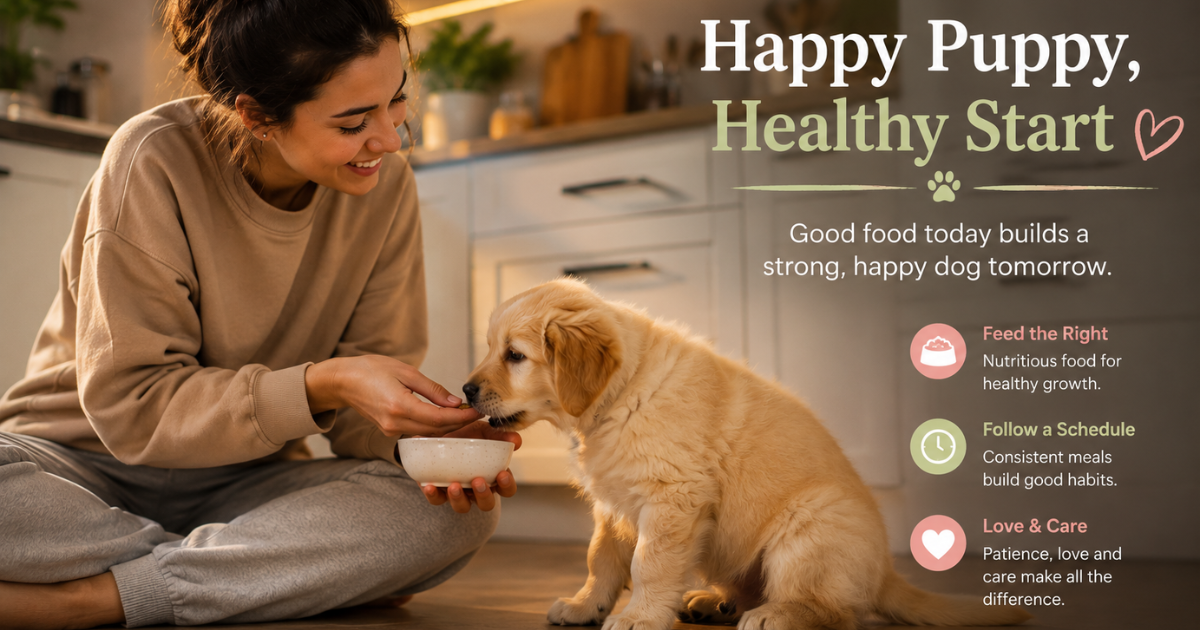
The first night we brought Coco home, I fed her four times.
Not because the vet told me to. Not because I’d done careful research. Because she kept looking at me with those enormous eyes every time I walked past her bowl and I had absolutely no idea what I was doing.
By morning she had diarrhea, was lethargic, and I was convinced I’d already broken my eight-week-old Golden Retriever in less than 24 hours.
The vet laughed — kindly — and explained that I’d overfed her, the portions were inconsistent, and her digestive system, which is about the size of a walnut at eight weeks, couldn’t handle the chaos I’d put it through. She handed me a feeding schedule printed on a piece of paper and said “follow this exactly for the next two weeks.”
Everything improved within three days.
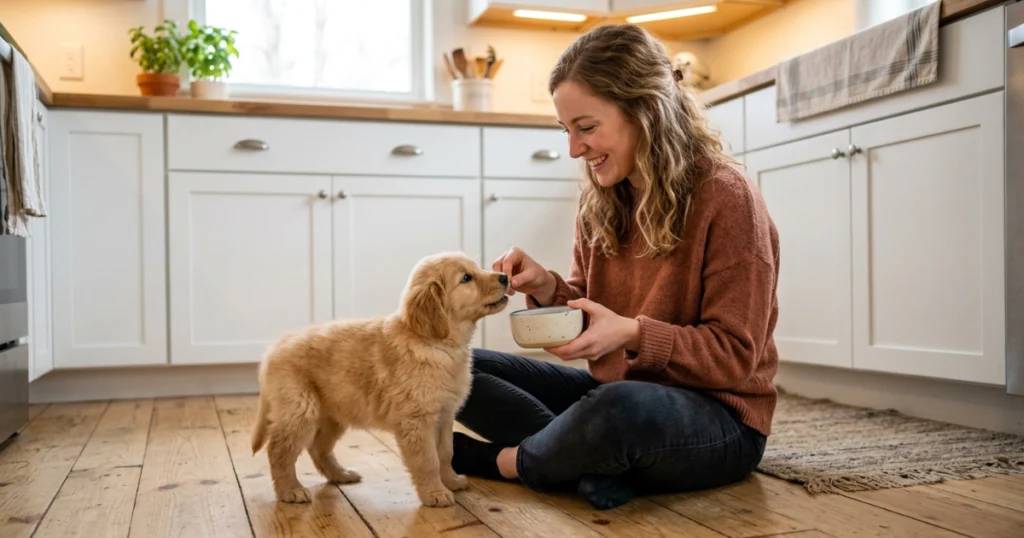
That little printed schedule changed everything. And looking back, I can’t believe nobody mentioned feeding frequency, portion sizes, or transitioning between puppy food stages when I picked Coco up from the breeder. They just said “feed her puppy food” and sent me on my way.
If you just brought home a puppy — or you’re about to — here’s the puppy feeding schedule and everything around it that I wish someone had handed me on day one.
Why a Feeding Schedule Matters More Than You Think
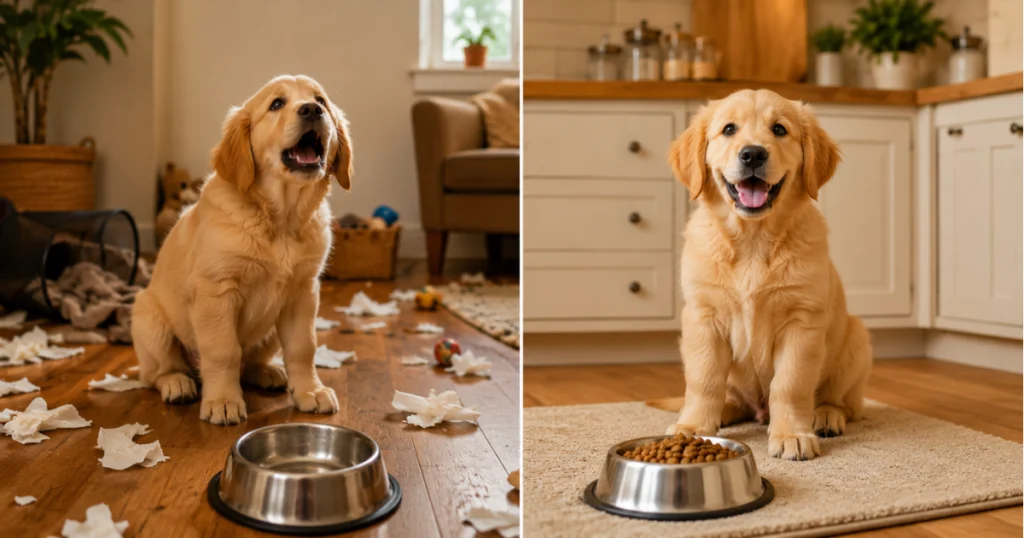
It’s not just about keeping the puppy from being hungry. The feeding schedule affects almost everything else you’re trying to establish in those first months.
Digestion. Puppies have tiny digestive systems that work best with small, consistent, predictable meals. Irregular feeding times mean irregular digestion, which means unpredictable stool — which makes potty training significantly harder.
Potty training. This connection surprised me. Puppies typically need to eliminate 15–30 minutes after eating. If you know exactly when they eat, you know exactly when to take them outside. The feeding schedule essentially becomes your potty schedule. Once I understood this, Coco’s accidents inside dropped dramatically within a week.
Blood sugar stability. Puppies are more susceptible to hypoglycemia (low blood sugar) than adult dogs, especially small breeds. Regular mealtimes maintain stable blood sugar throughout the day. Skipping meals or feeding irregularly causes energy crashes that look like lethargy or even shakiness.
Building trust and routine. Puppies thrive on predictability. Knowing when food is coming reduces anxiety. A puppy who knows the rhythm of their day — wake up, outside, eat, play, nap — settles faster and causes less chaos than one living in an unpredictable environment.
Coco went from a whining, anxious, overexcited tornado to a dog with actual chill once we nailed the routine. The feeding schedule was the anchor that made everything else fall into place.
Puppy Feeding Schedule by Age
This is the core of it. The number of meals per day changes significantly as puppies grow.
6–12 Weeks: 4 Meals Per Day
At this age, a puppy’s stomach is tiny, blood sugar drops fast, and they need frequent, small meals to stay stable and grow properly. Most puppies come home somewhere in this window — 8 weeks is standard — so this is where most owners start.
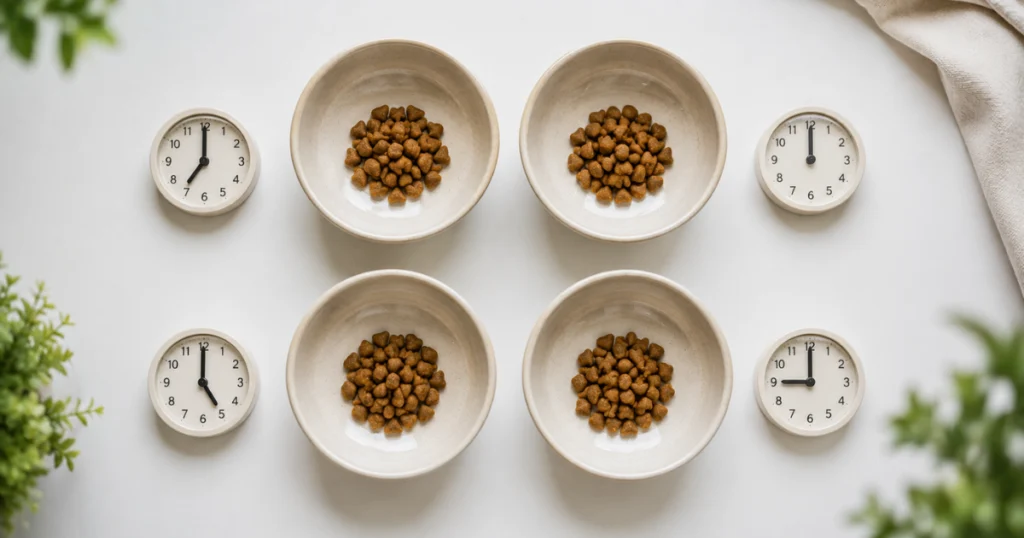
Sample schedule:
- 7:00 AM — Meal 1
- 12:00 PM — Meal 2
- 5:00 PM — Meal 3
- 9:00 PM — Meal 4
Keep portions equal across all four meals. The total daily amount comes from the feeding guide on your specific food’s packaging — divide that by 4. Don’t eyeball it. Use a kitchen scale or at minimum a measuring cup every single time.
With Coco at 8 weeks, I was feeding her about 1.5 cups total per day divided into four portions of about ⅜ cup each. Looked tiny. She was perfectly healthy.
3–6 Months: 3 Meals Per Day
Around 12 weeks, most puppies can comfortably handle three meals a day. Their stomach capacity has increased and blood sugar regulation improves.
Sample schedule:
- 7:00 AM — Meal 1
- 1:00 PM — Meal 2
- 6:00 PM — Meal 3
The transition from 4 to 3 meals should be gradual over about a week — drop one meal and slightly increase the others rather than going cold turkey.
This is also when potty training really starts clicking, because the eating-to-elimination window becomes more predictable with three set meals rather than four.
6–12 Months: 2 Meals Per Day
Most puppies move to twice-daily feeding somewhere between 6 and 12 months. Smaller breeds tend to be ready earlier (around 6 months). Larger breeds, especially giant breeds, often benefit from staying on 3 meals until closer to 12 months to reduce bloat risk.
Sample schedule:
- 7:00 AM — Meal 1
- 6:00 PM — Meal 2
This is the adult feeding pattern most dogs follow for life. By this point, portion sizes have increased significantly as the puppy has grown — always recalculate against the food packaging based on current weight, not the weight they were last month.
12 Months+: Transition to Adult Food
This is where the feeding schedule itself stays the same (two meals a day) but the food changes. Most breeds transition from puppy to adult food around 12 months. Large breeds (50 lbs+) typically wait until 18 months. Giant breeds (100 lbs+) often wait until 24 months, because their growth plates close later and puppy food’s nutrient profile supports that longer development.
Don’t switch overnight — see the transition plan section below.
How Much to Feed: The Portion Question
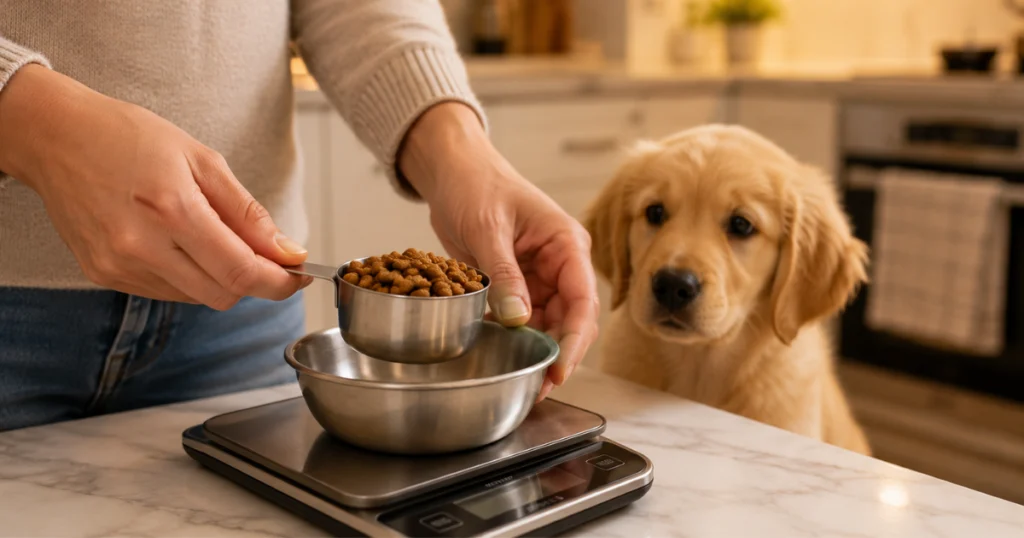
“How much should I feed my puppy?” is probably the most common question new puppy owners have, and the honest answer is: it depends on the food, the breed, and the individual puppy.
Here’s how to figure it out properly:
Step 1: Start with the packaging guide Every bag of puppy food has a feeding chart based on expected adult weight and current age. This is your starting point, not a fixed rule.
Step 2: Divide by number of meals If the guide says 2 cups per day and you’re feeding 4 times, that’s ½ cup per meal.
Step 3: Assess body condition weekly The scale is less useful than your hands. Run your hands along your puppy’s ribs:
- Can’t feel ribs at all → reduce by 10%
- Can feel ribs easily without pressing → you’re in the right range
- Ribs very prominent and visible → increase by 10%
Also look from above — a healthy puppy should have a visible waist, not look like a stuffed sausage or a skeleton.
Step 4: Adjust as they grow Puppies grow fast. A portion that was right at 10 weeks may be too small at 14 weeks. Reassess every 2–3 weeks and adjust upward as they grow. This is where a lot of owners fall behind — they set the portion once and forget to update it.
Coco’s portions changed six times in her first year. I kept a simple note in my phone with the date and current portion so I could track it.
What to Feed: Choosing the Right Puppy Food
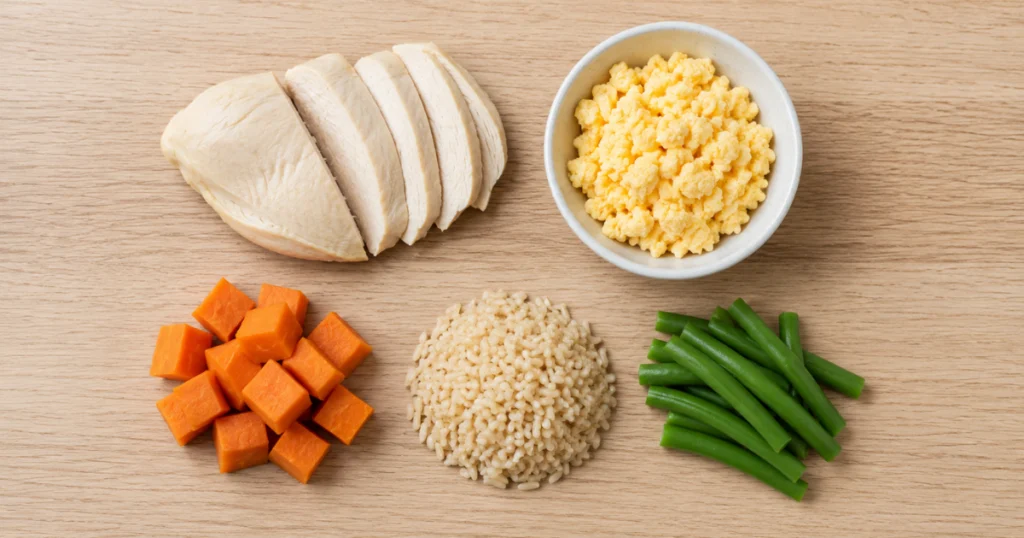
The schedule only works if what’s going in the bowl is right for where your puppy is developmentally.
Look for AAFCO “growth” or “all life stages” statement The AAFCO statement (usually small print on the back or side of the bag) tells you whether the food is genuinely formulated for puppies. “Adult maintenance” means it’s not designed for growing dogs and shouldn’t be the primary food for a puppy.
Large breed puppies need large breed puppy food This is one of the most important things owners of big dogs miss. Large breed puppy formulas have controlled calcium and phosphorus levels — crucial for supporting bone development at the right rate. Too much calcium too fast is linked to developmental joint problems in large breeds. A Golden Retriever puppy should not be eating small breed puppy food, and vice versa.
Protein and fat levels matter Puppies need higher protein than adult dogs (around 22–28% minimum) to support rapid muscle and tissue development. Fat should be around 8–17% for energy and brain development. If the food doesn’t meet these minimums, it’s not ideal for puppy growth.
Our complete dog nutrition guide covers how to read labels properly and evaluate what’s actually in the food beyond the marketing. And our best puppy food for small breeds guide is worth checking if you have a small or toy breed — their nutritional needs are slightly different again.
Wet Food, Dry Food, or Both?
This comes up constantly in puppy owner forums and the answer is genuinely flexible.
Dry kibble is the most practical choice for most owners — easy to store, easy to portion, and the texture helps with early dental hygiene. Most puppies do completely fine on high-quality kibble.
Wet food is more palatable and higher in moisture, which some puppies prefer — especially picky eaters or puppies coming off mother’s milk who find dry food unappealing at first. The downside is cost and the fact that it doesn’t contribute to dental health the way kibble does.
A mix of both is what I ended up doing with Coco. She got kibble as her base with a spoonful of wet food mixed in for the first month, which made the transition from her breeder’s food much easier. Once she was fully settled, we moved to kibble only.
If you try homemade food during puppyhood, be especially careful about nutritional completeness — growing puppies have very specific calcium and phosphorus requirements that are hard to meet without careful formulation. Our homemade dog food recipes have a good foundation, but get a vet review before going fully homemade for a puppy.
Transitioning Between Foods: The 10-Day Rule
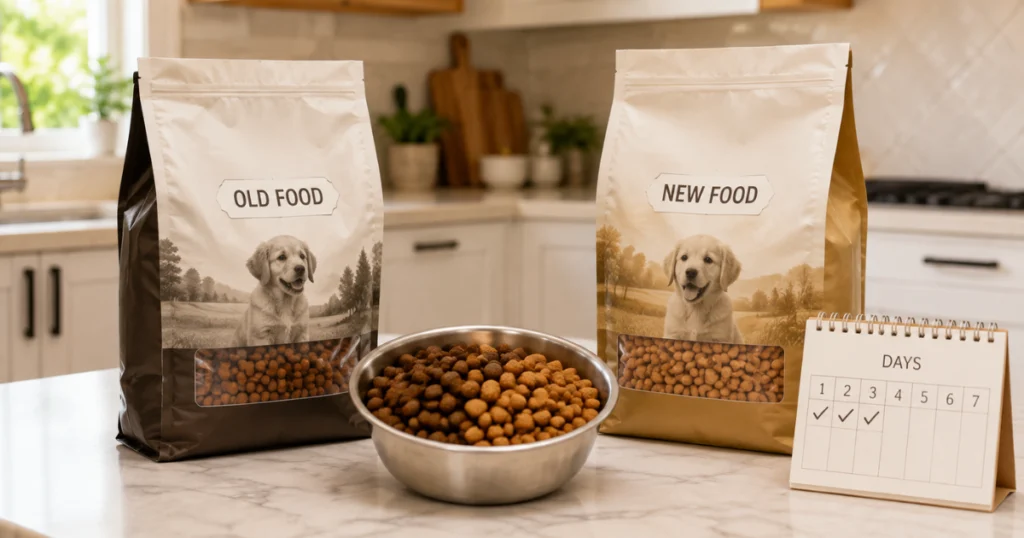
Whether you’re switching from the breeder’s food to your chosen food, or transitioning from puppy to adult food later, this is the process:
| Day | Old Food | New Food |
| 1–2 | 80% | 20% |
| 3–4 | 60% | 40% |
| 5–6 | 40% | 60% |
| 7–8 | 20% | 80% |
| 9–10 | 0% | 100% |
Puppy digestive systems are sensitive. Moving too fast causes diarrhea, which new puppy owners often panic about and blame on the new food — when it’s actually the speed of the switch, not the food itself.
If at any stage you see loose stool, pause and hold at that ratio for two more days before moving forward.
I made the mistake of switching Coco from her breeder’s food to our chosen food in three days because I ran out of the breeder’s food. The diarrhea lasted four days. Lesson learned the uncomfortable way.
Free Feeding vs. Scheduled Meals: Why Free Feeding Loses
Some people leave food out all day and let the puppy eat whenever they want. I understand the appeal — it’s one less thing to manage. But for puppies, it’s a bad idea for several reasons.
You can’t track intake. If you don’t know how much they ate, you can’t tell if they’re eating less (often the first sign of illness) or more than they should.
It wrecks potty training. If food goes in at random times, elimination happens at random times. You lose the eat-then-outside rhythm that makes potty training manageable.
It leads to picky eating. Puppies who always have food available learn that food is always available — which makes them more likely to ignore their bowl and hold out for something better.
It can cause overeating. Some puppies will self-regulate. Many will eat until the bowl is empty and then look for more. Obesity in puppies creates joint problems that compound as they grow.
Scheduled meals solve all of these. 15 minutes for the meal, then the bowl comes up. Whatever’s left goes away. Most puppies adapt to this within a week and become much more enthusiastic eaters when they know the meal window is limited.
Using Apps to Track Puppy Feeding
Once I had two or three schedule changes happening and Coco was eating different amounts at different ages, I started tracking in an app.
Puppr and Dog Log both let you log meals, portions, weight, and vet visits. Even the default Reminders app on iPhone or the Google Keep app works well — I had a recurring daily reminder for each meal time so I’d never forget whether she’d been fed (puppies are good at pretending they haven’t been).
For families or households where multiple people might feed the puppy, having a shared note or a simple whiteboard on the fridge with “Fed / Not Fed” and the time avoids accidental double feeding. This happened to us twice in the first month — both my partner and I fed Coco her morning meal because neither of us remembered if the other had done it.
Common Mistakes New Puppy Owners Make
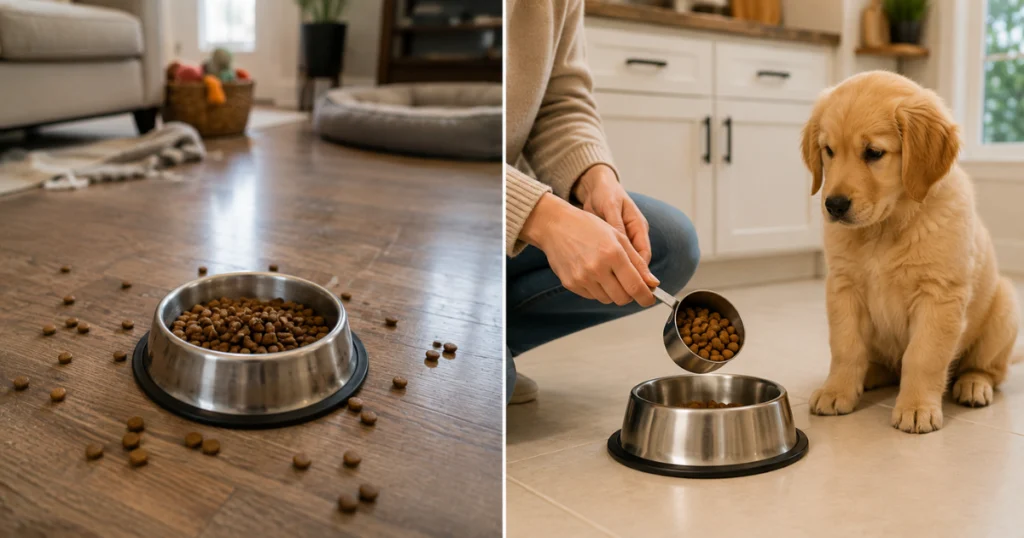
Using adult dog food from the start. Adult food doesn’t meet the protein and calorie density puppies need for growth. If someone hands you a bag of their leftover adult dog food for your new puppy, use it for a few days while you get the right food, but don’t make it a long-term plan.
Measuring portions in “handfuls.” A handful varies by hand size, how loosely you hold it, and whether you’re paying attention. Use a measuring cup at minimum. Use a kitchen scale if you want to be precise. The difference between ½ cup and ¾ cup over a day adds up fast.
Feeding immediately before exercise. Large breed puppies especially — eating right before vigorous play or exercise increases bloat risk. Wait at least 30–45 minutes after a meal before active play sessions.
Adding lots of extras to the bowl. Treats, toppers, human food additions — all of these add calories that aren’t being tracked. If you’re adding anything to the bowl regularly, reduce the base portion proportionally.
Not updating portions as the puppy grows. This is the one I see most often. Parents set the portion at 8 weeks and don’t revisit it. A 4-month-old puppy weighs significantly more and needs significantly more food than an 8-week-old. Check and adjust every 2–3 weeks.
Skipping the late meal too early. Some owners drop from 4 to 3 meals before the puppy is ready — usually around 10 weeks because it’s inconvenient. For very small breeds and toy breeds, holding 4 meals until at least 12 weeks reduces hypoglycemia risk.
Frequently Asked Questions
How many times a day should a puppy eat?
4 times a day from 6–12 weeks, 3 times from 3–6 months, and 2 times from 6 months onward. Large and giant breeds often benefit from staying on 3 meals a day until 12 months.
What if my puppy doesn’t finish their meal?
Leave the food for 15 minutes, then pick up whatever’s left. Don’t top it up or offer alternatives — that teaches the puppy that not eating leads to better options appearing. Most healthy puppies will eat consistently once they’re settled. Persistent refusal to eat (more than a day) warrants a vet call.
Can I free-feed my puppy?
Technically yes, but it’s not recommended. It makes potty training much harder, prevents you from tracking intake, and often leads to overeating or picky eating habits. Scheduled meals are significantly better for puppies especially.
When should I switch from puppy food to adult food?
Most breeds at 12 months. Large breeds (50 lbs+) at 18 months. Giant breeds (100 lbs+) at 24 months. Switching too early cuts off nutrients needed for the final stages of growth and bone development.
My puppy always seems hungry. Am I underfeeding?
Not necessarily — puppies are almost always enthusiastic about food and will act hungry even right after eating. Check body condition (rib feel, visible waist) rather than relying on how desperate the puppy seems. If body condition checks out, you’re feeding enough.
Can I give my puppy treats and does that count toward daily calories?
Yes, treats count. They should make up no more than 10% of daily calories. Reduce the base meal portion slightly if you’re using a lot of treats during training. Small training treats (pea-sized) are better than large ones for this reason.
What if I accidentally miss a meal?
Don’t double up on the next meal to compensate — just continue with the next scheduled meal at the normal portion. Doubling up causes digestive overload. One missed meal for a healthy puppy over 10 weeks is not a health emergency.
Should I add water to dry puppy food?
Some owners do this to slow eating or make food more appealing. It’s fine and can help very young puppies who find hard kibble difficult. Use warm (not hot) water and let it sit for a few minutes to soften slightly. Just mix a small amount — you’re softening, not making soup.
My puppy eats too fast and vomits after meals. What do I do?
Get a slow feeder bowl or a licki mat. These add friction or surface area that forces the puppy to slow down significantly. Coco went from inhaling her food in 20 seconds to taking 4–5 minutes with a slow feeder bowl — no more post-meal vomiting. Puzzle feeders work great too and double as mental enrichment.
How do I know if I’m feeding the right puppy food?
After 4–6 weeks on a food, your puppy should have consistent firm stools, good energy, steady weight gain, and a coat that’s developing well (not dull or flaky). Persistent loose stools, low energy, poor weight gain, or excessive gas are signs the food may not be the right fit. Check out our best puppy foods guide for options that consistently perform well across different breeds and sizes.
What the Schedule Actually Looked Like for Us
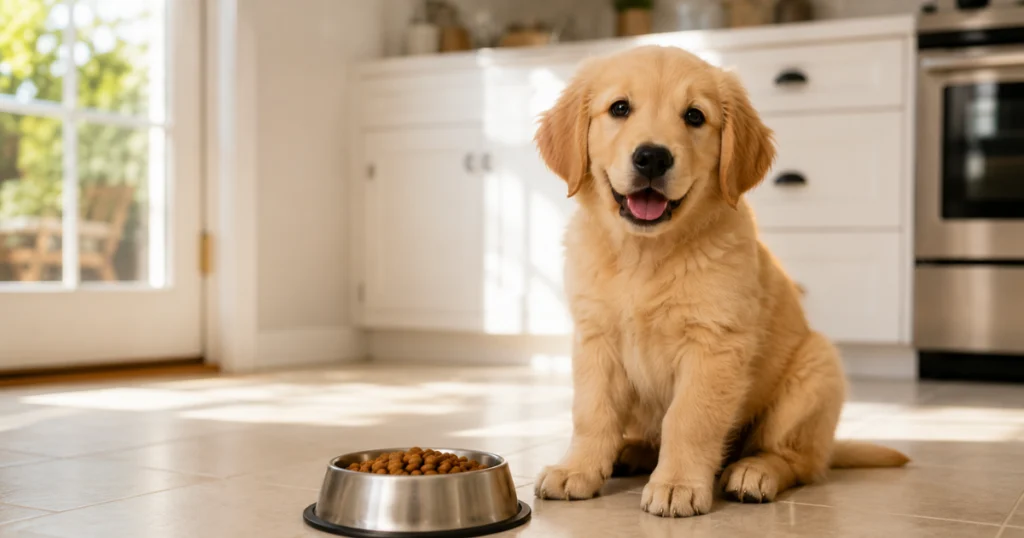
By month 3, Coco’s feeding schedule was running like clockwork:
- 7:00 AM — ⅔ cup kibble, straight outside after
- 1:00 PM — ⅔ cup kibble, outside after
- 6:00 PM — ⅔ cup kibble, outside after
She knew the rhythm. She’d sit by her bowl around meal time without being called. She stopped having accidents inside because her digestive pattern became completely predictable. She started sleeping through the night around 10 weeks, which I’m pretty sure was partly because her body knew when to expect food and when not to.
The feeding schedule isn’t glamorous. It’s not exciting. But it was the single most impactful thing I did in those first months — more than any training technique, any toy, or any amount of YouTube puppy training videos.
Get the schedule right and almost everything else gets easier. For the full nutritional picture of what puppies actually need at each life stage, our complete dog nutrition guide covers it in depth alongside the other life stages — useful reading as Coco approaches her first birthday and the adult food transition begins.