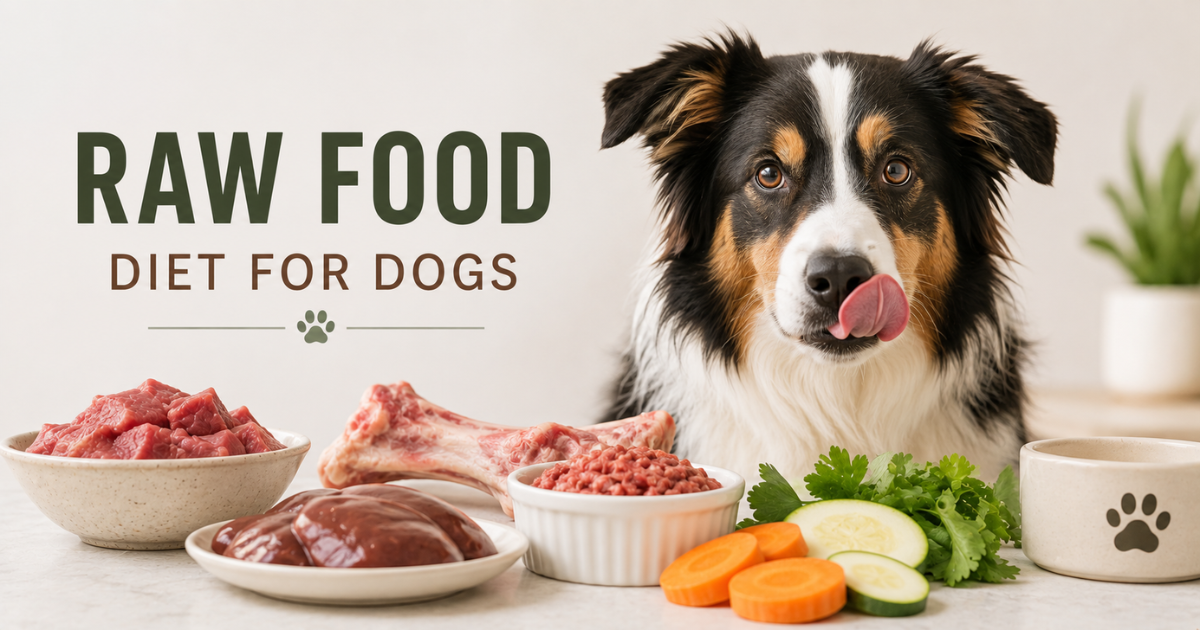
My neighbor has been raw feeding her two German Shepherds for four years. Their coats look unreal — thick, shiny, the kind of coat you see in show dogs. Every time I’d see them on our morning walks I’d think about it. Maybe there was something to this raw food thing after all.
I started researching. Spent about three weeks going down forums, Facebook groups, YouTube channels. The raw feeding community is passionate — sometimes to the point where it felt like a religion more than a dietary choice. Anyone who questioned it got jumped on. Anyone who mentioned bacteria risk got told their dog was basically a wolf.
My dog at the time was a three-year-old Aussie Shepherd named Dash. Healthy, active, eating a good quality kibble. No particular issues. I didn’t need to switch — I was just curious.
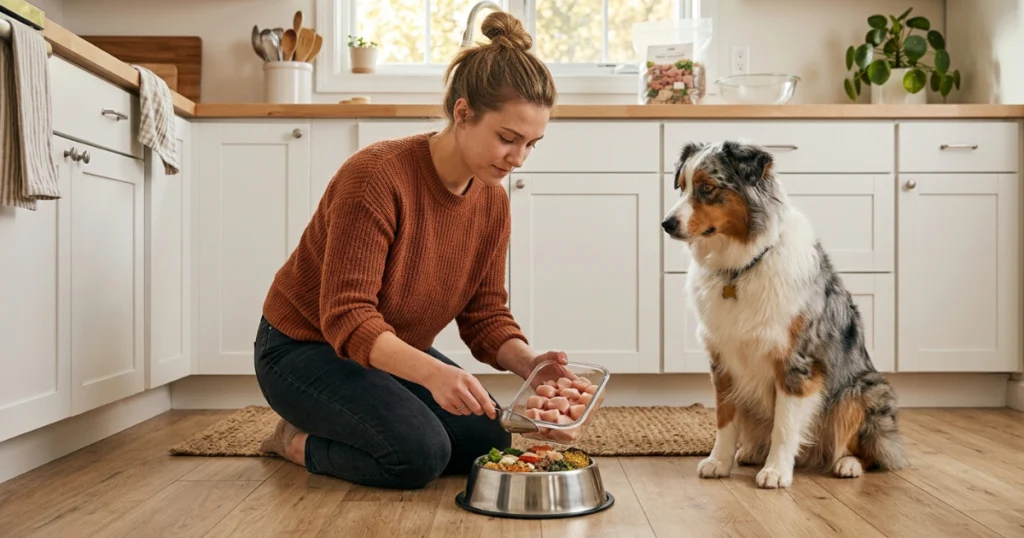
I switched anyway. Fed raw dog food diet for six months, kept detailed notes, then went back to kibble.
This is what I actually found.
What Raw Feeding Actually Is
The term gets used loosely so it’s worth being clear. Raw feeding — sometimes called BARF (Biologically Appropriate Raw Food) or prey model raw — means feeding your dog uncooked meat, raw meaty bones, organ meat, and sometimes vegetables and supplements instead of commercial processed food.
There are a few approaches:
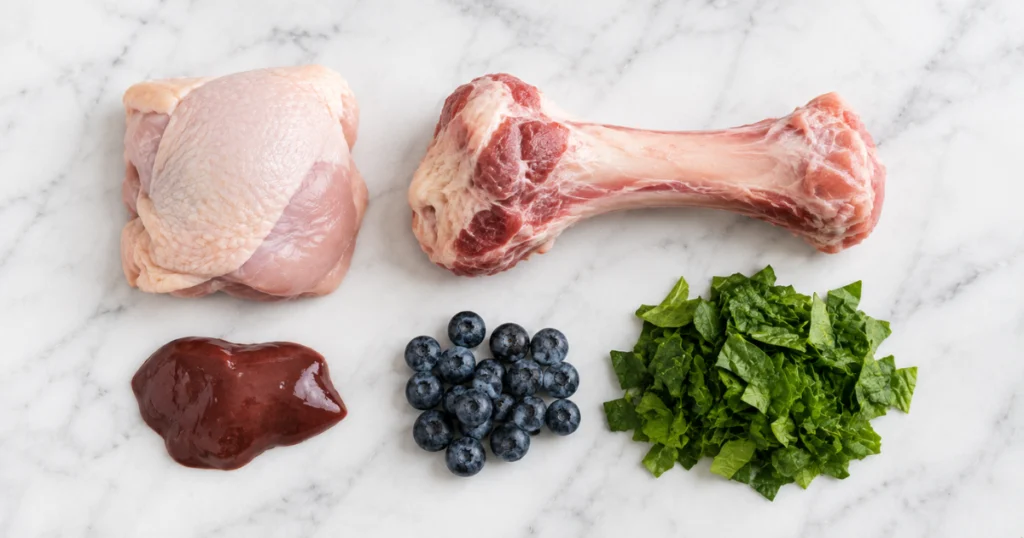
BARF (Biologically Appropriate Raw Food): The most structured method. Roughly 70% muscle meat, 10% raw edible bone, 10% organ meat (with 5% being liver specifically), and 10% vegetables, fruit, and other additions. This was developed by Australian veterinarian Ian Billinghurst in the 1990s.
Prey Model Raw (PMR): Stricter, with no vegetables or fruit. The idea is to replicate what a dog would eat consuming a whole prey animal. Roughly 80% muscle meat, 10% bone, 10% organ.
Commercial Raw: Pre-made frozen or freeze-dried raw food that’s been formulated and balanced for you. The easiest entry point, significantly more expensive than home-prepared raw.
Frankenprey: Assembling whole prey animals or parts (whole rabbits, whole quail, whole fish) to achieve balance over time rather than per meal.
Each approach has its advocates and its critics. What they share is the core principle: unprocessed, uncooked food is closer to what dogs evolved eating.
What Actually Improved With Dash
I’m going to start here because the improvements were real and I want to be honest about that.

Coat condition. This was the first thing I noticed, around week four. Dash’s coat had always been decent. On raw it became noticeably denser and shinier. Not dramatically different but clearly different. My wife noticed without me saying anything, which felt like a reliable data point.
Stool volume and consistency. This one surprised me with how significant the change was. On kibble, Dash produced a significant amount of stool. On raw, the volume dropped by probably 60%. The stool was firmer, less smelly, and broke down faster. This happens because raw food is more fully digested — less filler, less waste. Anyone who’s managed a large dog’s bathroom habits will understand why this matters.
Energy and muscle tone. Harder to measure objectively, but Dash seemed leaner and more muscular at the end of six months. He’d always been an active dog. On raw he just looked physically better.
Dental health. Raw meaty bones do genuinely clean teeth. The gnawing and tearing action removes tartar in a way that no dental chew or kibble shape replicates. Dash’s teeth were noticeably cleaner at his six-month checkup than they’d ever been.
These were real improvements. I’m not going to downplay them to make a point.
What Was Actually Hard
Time and planning. Meal prep for a dog on raw is not trivial. Sourcing meat, portioning, freezing, thawing 24 hours in advance, handling raw meat twice a day — it adds up. I spent probably 30–40 minutes a week on Dash’s food that I wasn’t spending before. Manageable but real.
Cost. Feeding raw at the quality level I wanted — human-grade or at least butcher-grade muscle meat, quality organ — cost roughly 2.5x what I was spending on kibble. I was in a position to absorb that. Many owners aren’t.
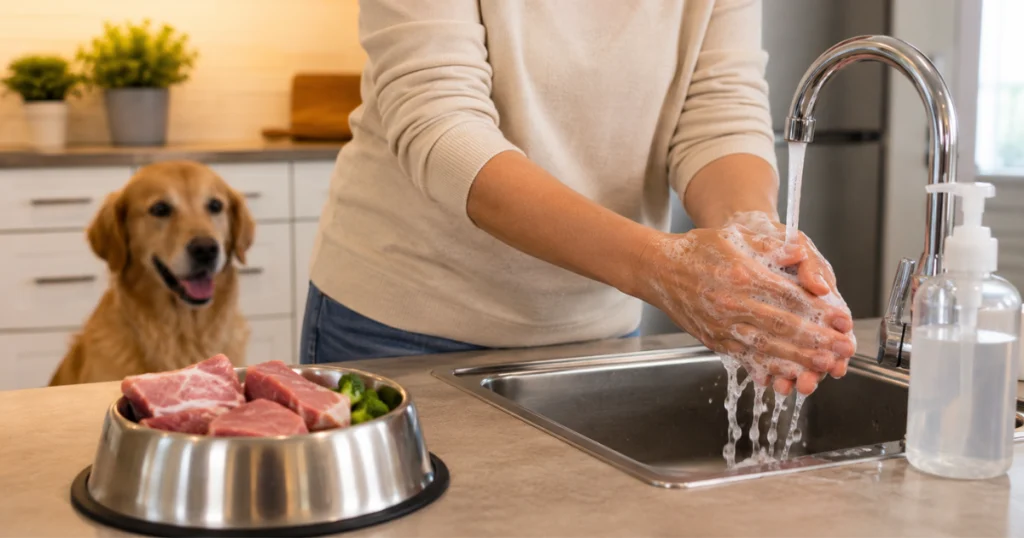
Bacterial handling. This is where I had to be more disciplined than I expected. Raw meat means Salmonella, Campylobacter, E. coli risk — not just for Dash but for my household. Separate cutting boards, immediate washing of all surfaces and utensils, keeping Dash out of the kitchen during prep, washing hands every time. My kids were young at the time, which added another layer of concern. I was vigilant. Vigilance has a cost in mental load.
Balancing the diet. This is the part the raw feeding community sometimes glosses over. Getting the calcium-to-phosphorus ratio right, making sure organ meat doesn’t exceed the threshold where it becomes toxic (too much liver causes vitamin A toxicity), ensuring enough of the right minerals — it requires either careful formulation or trusting that “balance over time” actually works. I was never entirely comfortable with the uncertainty.
Travel. Raw feeding and travel don’t mix easily. Boarding a raw-fed dog requires the facility to handle raw meat. Bringing raw food on a trip requires coolers and planning. Road trips with Dash became more logistically complicated.
The Bacteria Question — Honestly
The bacteria risk is real. Not invented by kibble companies, not overblown by paranoid vets. Real.
Raw poultry in particular regularly tests positive for Salmonella. Dogs can typically handle bacterial loads that would make humans very sick — their digestive systems are faster and more acidic. But “typically” is doing a lot of work in that sentence.
Immunocompromised dogs — very young puppies, senior dogs, dogs on immunosuppressive medications — are at genuinely higher risk. So are immunocompromised humans in the household. The American Veterinary Medical Association has guidelines specifically advising against raw feeding in households with young children, elderly people, pregnant women, or people with compromised immune systems.
Dash never got sick from raw feeding. But I was also disciplined about handling, and my household doesn’t have any of the high-risk factors. I don’t want to extrapolate from my experience to suggest the risk is negligible — the research doesn’t support that.
How to Start Raw Feeding If You’ve Decided to Try It
If you’ve weighed the considerations and you want to try it, here’s how to do it without making the common mistakes.
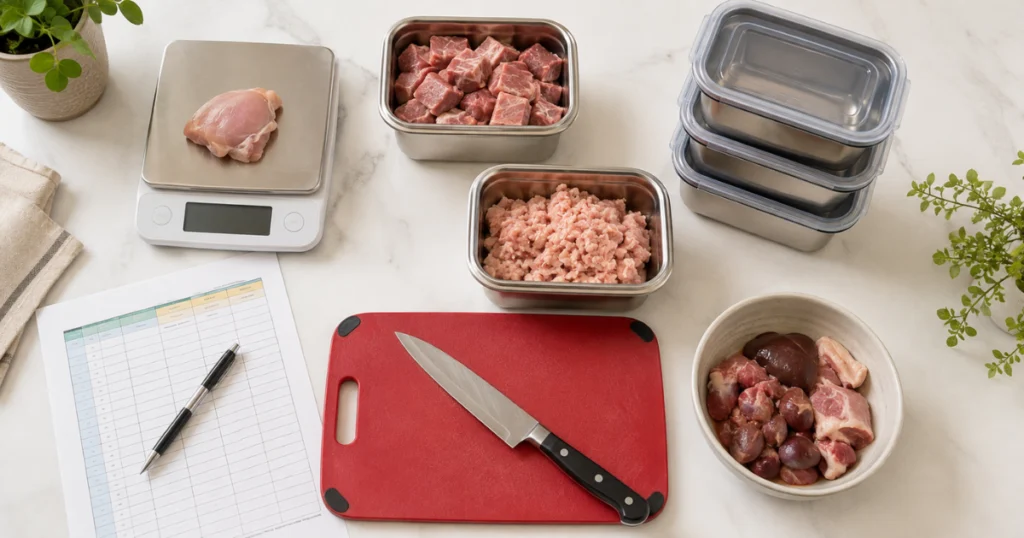
Step 1: Start with a simple single protein
Don’t start with a complex multi-protein BARF formula on day one. Begin with one protein source — chicken is commonly recommended for starting because it’s inexpensive and easy to source. Use chicken thighs with bone (not breast — too lean, and bone is important for calcium).
Feed this single protein for 2–3 weeks while your dog’s digestive system adjusts. Loose stool in the first week is common and usually normalizes.
Step 2: Transition gradually
Don’t switch cold turkey from kibble to raw on the same day. The digestive microbiome needs time to shift. Over 1–2 weeks, gradually replace kibble meals with raw meals. Some raw feeders recommend fasting for 12 hours before the first raw meal to ensure the stomach is empty — this reduces the chance of kibble and raw sitting together and fermenting.
Step 3: Get the ratios right before you get creative
The BARF ratio (70% muscle meat / 10% bone / 10% organ / 10% other) is a starting framework, not a rigid rule, but it’s a reasonable starting point. Measure and weigh initially rather than eyeballing. Get a kitchen scale. Apps like Raw & Fresh or the BARF World app can help you track nutritional balance — they’re not perfect but they’re much better than guessing.
Step 4: Introduce organ meat carefully
Liver especially should be introduced slowly — small amounts, building up over weeks. Too much liver too fast causes loose stool almost universally. Too much liver over the long term causes vitamin A toxicity. Start with 5% liver and don’t exceed 5–10% organ total (with liver being no more than half of the organ portion) as you settle into a routine.
Step 5: Add variety over time
Once your dog is stable on the initial protein, add a second protein source. Then a third. Variety across protein sources provides better nutritional balance than any single protein can. Over time, a raw-fed dog eating multiple proteins — chicken, beef, lamb, fish, rabbit — is getting broader micronutrient coverage than one eating only chicken.
Step 6: Handle everything like you’d handle raw meat for yourself
Dedicated cutting boards and utensils. Thaw in the fridge, not on the counter. Don’t let your dog lick your face immediately after eating. Wash hands after every contact with raw meat. Clean the food bowl after every meal. This isn’t optional.
Step 7: Get a vet check at 3 months
Ask for bloodwork including calcium, phosphorus, and vitamin D levels. This will tell you whether the diet is working nutritionally. A vet who is open to discussing raw feeding is valuable — they exist, even if they’re not always easy to find.
Commercial Raw: The Middle Ground Most People Don’t Consider
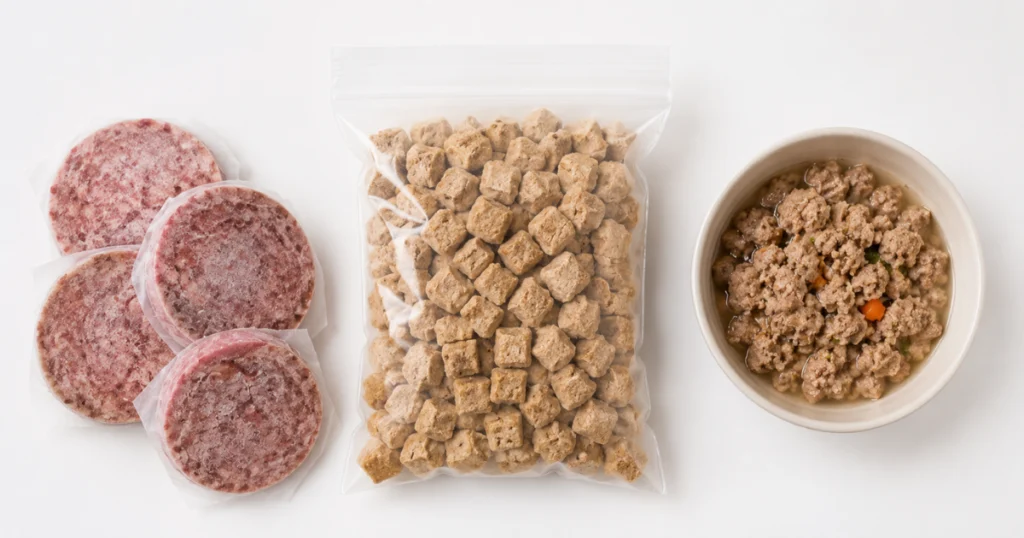
If the DIY aspect of raw feeding feels like too much, commercial raw is worth knowing about.
Brands like Instinct Raw, Primal Pet Foods, Stella & Chewy’s, and Darwin’s Natural Pet Food offer pre-made raw that’s been formulated by veterinary nutritionists, balanced for complete nutrition, and processed (in most cases) through High Pressure Processing (HPP) — a method that reduces bacterial load without cooking.
HPP doesn’t eliminate all bacteria but it reduces it significantly. It’s a reasonable compromise between the nutritional profile of raw and the convenience and safety management of commercial food.
The downside is cost. Commercial raw is expensive — often $5–10 or more per day for a medium-sized dog. But if you want the potential benefits of raw without the formulation complexity, it’s a legitimate option.
Why I Went Back to Kibble
After six months, I switched Dash back to high-quality kibble. Here’s why.
The second child arrived. A newborn in the house changed my household’s risk calculation around raw meat handling. The mental load of raw feeding combined with a newborn was more than I wanted to manage.
The cost added up. Six months of feeding Dash well on raw was noticeably more expensive than his previous diet. With a baby and all that comes with that, reallocating that money felt right.
Dash was fine on kibble. He’d been healthy on good kibble before the switch. He went back to good kibble after. His coat lost a little of the raw feeding glow over a few months but he was healthy and happy.
The improvements I saw were real. But they weren’t dramatic enough to justify the ongoing cost and effort for my specific situation.
That calculation is different for every household.
Mistakes I Made (So You Don’t Have To)
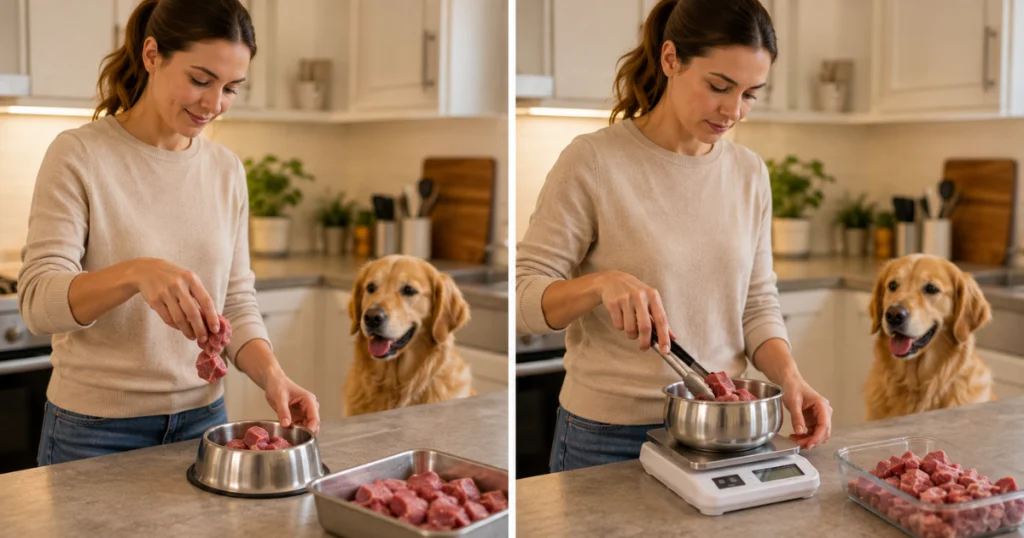
I introduced organ meat too fast. Week two, I added chicken liver at about 15% of the diet because I’d read it was important. Three days of very loose stool followed. Organ meat needs to go in slowly and build over several weeks.
I didn’t weigh portions. For the first month I was eyeballing portions based on the “2-3% of body weight” rule. Dash is 22kg, so 440–660g per day. Eyeballing that range is harder than it sounds. I was probably underfeeding for the first few weeks before I got a scale.
I used the Facebook group as my primary information source. Raw feeding communities are enthusiastic but not always rigorous. Some of the advice I got was genuinely good. Some of it was ideology dressed as science. Learning to tell the difference took time I didn’t have in the early weeks.
I didn’t have a conversation with my vet before starting. My vet wasn’t anti-raw but she had useful things to say about bloodwork baselines and the specific nutritional risks for Dash’s age and breed. I should have had that conversation first.
Is Raw Dog Food Diet Right for Your Dog?
It might be, if:
- You have the time and budget to do it properly
- Your household doesn’t have high-risk individuals (young children, elderly, immunocompromised)
- Your dog doesn’t have health conditions that complicate dietary management
- You’re willing to learn the nutritional principles, not just follow a ratio
It’s probably not the right move if:
- You want a simpler daily routine
- Budget is a real constraint
- Young children or vulnerable adults are in the household
- Your dog is very young, very old, or immunocompromised

There is no universal answer. Raw feeding is a legitimate dietary approach that works well for many dogs when done thoughtfully. It’s also genuinely more demanding than any other feeding method, and the risks are real if it’s done carelessly.
For most healthy adult dogs, a high-quality commercial diet provides complete nutrition with significantly less complexity. Our complete dog nutrition guide covers how to evaluate commercial food quality so you’re comparing like with like — because not all kibble is the same, just as not all raw feeding is the same.
If you’re also weighing this against homemade cooked food, our homemade dog food recipes offer a useful middle ground — the ingredient transparency of homemade with significantly lower bacterial risk than raw. And if any of this connects to a sensitivity or allergy you’re trying to manage through diet, our dog food allergies guide covers the elimination diet process that helps identify what’s actually causing the problem before you make a major dietary change.
Frequently Asked Questions
Is raw dog food actually better than kibble?
For some dogs, in some situations, with proper formulation — yes, measurably. Better coat condition, improved digestion, and cleaner teeth are outcomes many raw feeders genuinely see. But “better” depends on formulation quality, handling discipline, and whether the dog’s specific health situation benefits from raw. A well-formulated commercial food is nutritionally complete and significantly lower maintenance. Neither is universally superior.
What are the risks of raw feeding?
Bacterial contamination (Salmonella, E. coli, Campylobacter) affecting both dogs and humans handling the food. Nutritional imbalance in poorly formulated home-prepared raw diets — particularly calcium/phosphorus ratio and vitamin A toxicity from excessive liver. Bone hazards when bones are inappropriate sizes or types. These risks are manageable with knowledge and discipline, but they’re real.
Can puppies eat raw food?
It’s possible but requires more careful management than adult raw feeding. Puppies are more vulnerable to bacterial illness and have specific developmental nutritional requirements (particularly for large breeds around calcium and phosphorus) that home-prepared raw diets can easily get wrong. If considering raw for a puppy, commercial raw formulated for puppies is a significantly safer starting point than home-prepared.
Do vets recommend raw food?
Most conventional vets don’t actively recommend raw feeding and some advise against it — primarily due to bacterial risk and nutritional balance concerns. Veterinary nutritionists are generally the most skeptical. Some integrative or holistic vets are more open to it. The honest answer is that the veterinary mainstream and the raw feeding community see this very differently, and the science supports some of both perspectives.
How much raw food should I feed my dog daily?
A common starting point is 2–3% of the dog’s ideal body weight per day, adjusted based on age and activity level. Puppies typically need 5–10% of their current body weight. These are starting points — body condition monitoring over time tells you whether to adjust. Weigh portions rather than estimating.
Can I mix raw and kibble in the same meal?
The raw feeding community often advises against this, citing different digestion times and pH requirements. The scientific evidence for this specific concern is limited, but it’s practically easier to keep them separate. If mixing, feeding raw and kibble at different meals rather than in the same bowl is the more common approach.
What raw bones are safe for dogs?
Raw (never cooked) bones that are appropriately sized — larger than what the dog can swallow whole. Chicken wings, chicken necks, and lamb ribs for smaller dogs. Turkey necks, beef ribs, and lamb shanks for larger dogs. Weight-bearing bones from large animals (beef femur, for example) are too dense and can crack teeth. Always supervise bone feeding.
Is freeze-dried raw as good as fresh raw?
Freeze-drying preserves nutritional content better than high-heat processing and removes moisture (which inhibits bacterial growth), making it more shelf-stable and safer to handle than fresh raw. High Pressure Processing (HPP) used in some commercial raw reduces bacterial load while maintaining nutritional profile. Both are closer to fresh raw than kibble, but fresh raw from quality sources is the closest to the original concept.
How do I know if raw feeding is working for my dog?
Watch coat condition, energy level, stool consistency and volume, dental health, and body condition over 8–12 weeks. Ask for bloodwork at a vet check around the 3-month mark — calcium, phosphorus, vitamin D levels will tell you whether the nutritional balance is right in a way that visual assessment can’t.
What should I do if my dog gets sick on raw food?
Stop raw feeding and see a vet. Bacterial illness from raw food can escalate quickly, particularly in puppies and seniors. Bring information about what the dog has been eating — protein sources, bone sources, organ sources — so the vet can assess the likely cause. Don’t wait and see if it resolves on its own if vomiting or significant diarrhea is involved.
