Real recipes from a real cat owner — tested on one very picky Persian.
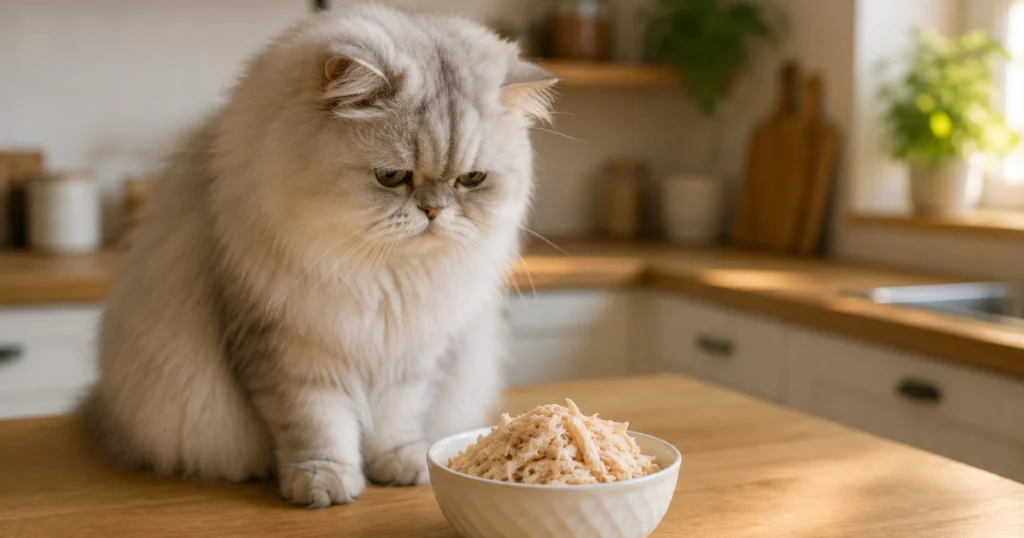
My cat Miso rejected seventeen different commercial cat foods before I finally gave up and started making her homemade cat food by myself.
Not seventeen brands. Seventeen individual products. Pâtés, shreds, gravies, grain-free, high-protein, senior formula, kitten formula even though she’s four — she turned her nose up at all of it. The vet said she was healthy. She said she was bored.
The switch to homemade cat food recipes wasn’t something I planned. One Tuesday night I cooked some plain chicken, shredded it, put it in her bowl. She ate the whole thing in under two minutes — then looked at me like I’d been holding out on her.
That was eighteen months ago. These ten recipes are the ones that have consistently worked for Miso and that I feel genuinely good about feeding her.
What You Need to Know Before Cooking for Your Cat
Cats are obligate carnivores. They need meat — not as a preference, but as a biological requirement. Protein from animal sources must be the foundation of every meal.
Taurine is non-negotiable. Cats can’t produce this amino acid on their own. Deficiency causes serious heart and eye problems. Meat naturally contains taurine, but if you’re making homemade food regularly, adding a powdered supplement is smart insurance.
Talk to your vet — especially if your cat has kidney disease, diabetes, or urinary problems. What’s fine for a healthy cat may not be right for every cat.
Foods You Should Never Cook for Your Cat
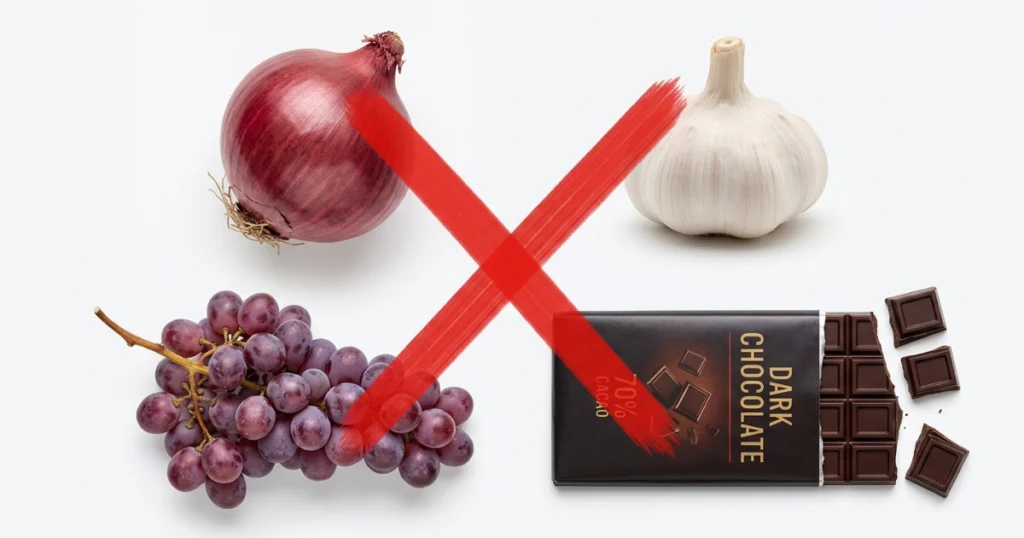
Before the recipes — these foods are genuinely toxic to cats, not just “not ideal”:
- Onions and garlic (including powder) — destroy red blood cells and cause anaemia. Always check broth labels.
- Grapes and raisins — can cause sudden kidney failure. Even one grape is dangerous.
- Chocolate and caffeine — affect the nervous system and heart.
- Xylitol — artificial sweetener found in some peanut butters. Causes dangerous blood sugar drops.
- Raw dough — expands in the stomach and produces alcohol as it ferments.
- Raw fish fed daily — contains thiaminase, which destroys vitamin B1 over time. Occasional cooked fish is fine.
- Liver in large quantities — fine in small amounts, but too much causes Vitamin A toxicity.
If your cat eats something toxic, contact your vet or the ASPCA Animal Poison Control Center immediately.
10 Homemade Cat Food Recipes (Quick, Safe & Tested)
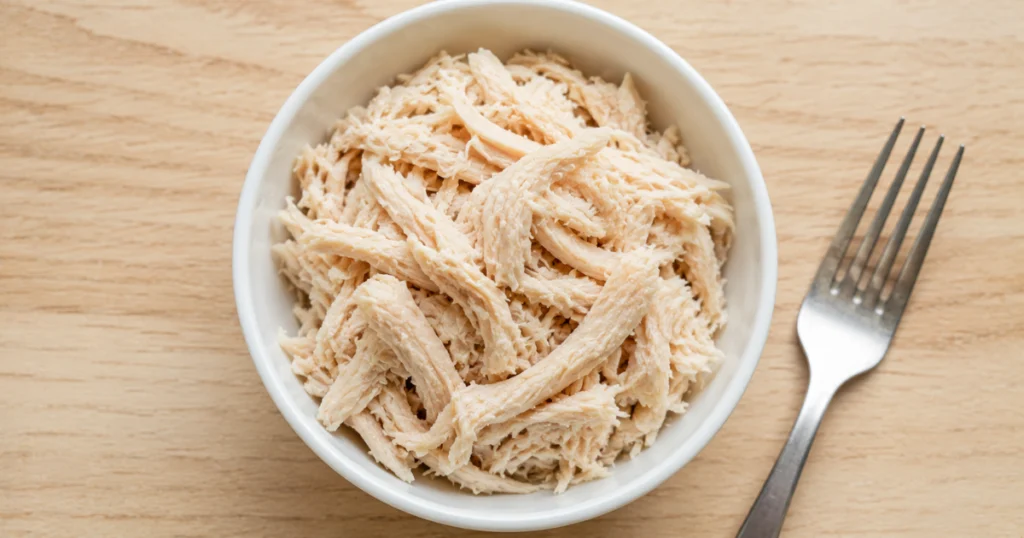
Recipe 1: Classic Shredded Chicken
Prep: 5 mins | Cook: 15 mins | Makes: 2–3 servings
- 1 boneless, skinless chicken breast
- ½ cup water or low-sodium chicken broth (check label — no onion or garlic)
- Boil chicken until fully cooked — about 15 minutes.
- Cool completely, then shred with two forks.
- Add a tablespoon of cooking liquid to keep it moist.
- Serve at room temperature.
Storage: 3 days in fridge, or freeze in ice cube trays for easy single portions.
Miso’s verdict: The original five-star review. She finishes it every time.
Recipe 2: Tuna and Rice Bowl
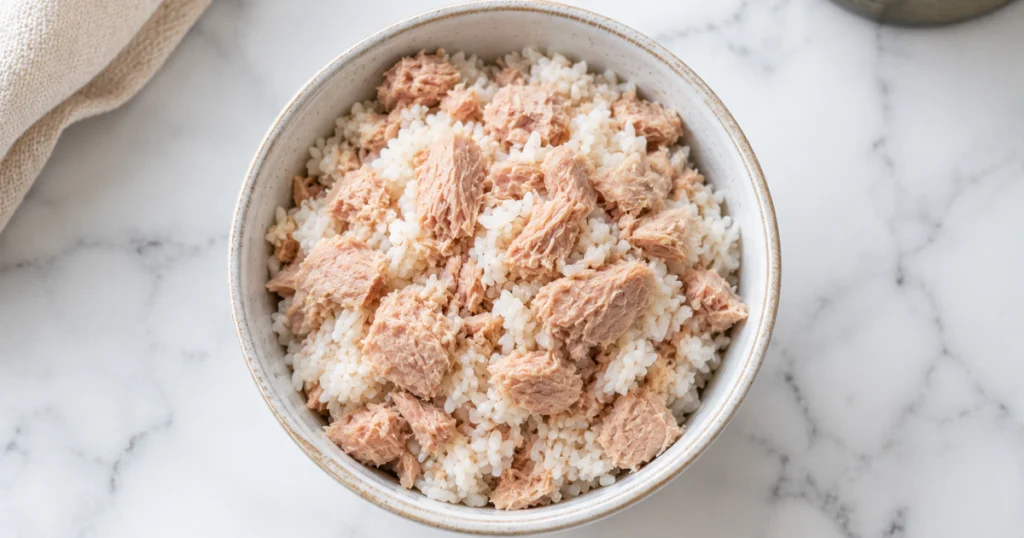
Prep: 2 mins | Cook: 0 mins | Makes: 1–2 servings
- 1 can tuna in water (plain — not oil, not flavored)
- 2 tablespoons cooked white rice
- Drain the tuna well.
- Mix with rice, add a splash of water if dry, serve at room temperature.
Important: Tuna once or twice a week at most — daily tuna causes mercury buildup and can create a food addiction.
Recipe 3: Salmon and Pumpkin Mash
Prep: 5 mins | Cook: 10 mins | Makes: 2 servings
- 2 oz cooked salmon (no seasoning, no oil)
- 1 tablespoon plain canned pumpkin (not pumpkin pie filling)
- Flake salmon into small pieces, checking for bones.
- Mix in pumpkin and stir to combine. Serve at room temperature.
Why pumpkin? High in fiber, helpful for digestive irregularity. A small amount goes a long way.
Lesson learned: Never use seasoned salmon from your own dinner. I used garlic-powdered salmon once and spent 20 minutes on the pet poison helpline at 11pm. Always unseasoned.
Recipe 4: Chicken Liver Pâté
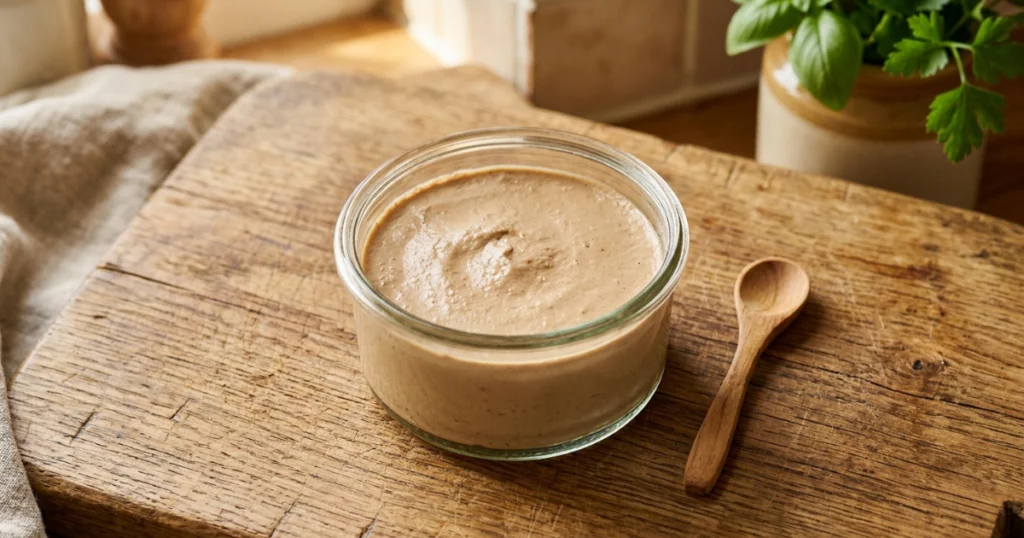
Prep: 5 mins | Cook: 10 mins | Makes: 4–5 servings
- 4 oz chicken livers
- 2 tablespoons water
- 1 tablespoon plain cooked carrot (optional)
- Rinse livers and trim connective tissue.
- Cook over medium heat until no longer pink — about 8 minutes.
- Cool, then blend with water until smooth. Add carrot if using.
- Refrigerate and serve in small amounts.
Important: Limit to once or twice a week — too much liver causes Vitamin A toxicity. Keep portions to 1–2 tablespoons.
Miso’s verdict: Unhinged enthusiasm. She follows me around the kitchen making demands.
Recipe 5: Ground Turkey and Zucchini Mix
Prep: 5 mins | Cook: 10 mins | Makes: 2–3 servings
- 3 oz lean ground turkey
- 1 tablespoon finely grated zucchini
- Cook turkey in a dry pan, breaking it up as it cooks.
- Add zucchini and stir for another minute until softened.
- Cool completely before serving.
Good for weight management. Zucchini adds moisture and fiber without affecting flavor — most cats don’t notice it at all.
Recipe 6: Sardine and Egg Scramble
Prep: 2 mins | Cook: 5 mins | Makes: 1–2 servings
- 2 sardines in water (drained)
- 1 egg
- Scramble egg over low heat — no butter, no oil, no salt.
- When nearly done, add sardines and break them in.
- Cook one more minute, cool, and serve.
Storage: Make fresh — doesn’t keep well. Serve within a day.
Miso’s verdict: She eats the sardines first. Then the egg. Her priorities are clear.
Recipe 7: Beef and Bone Broth Bowl
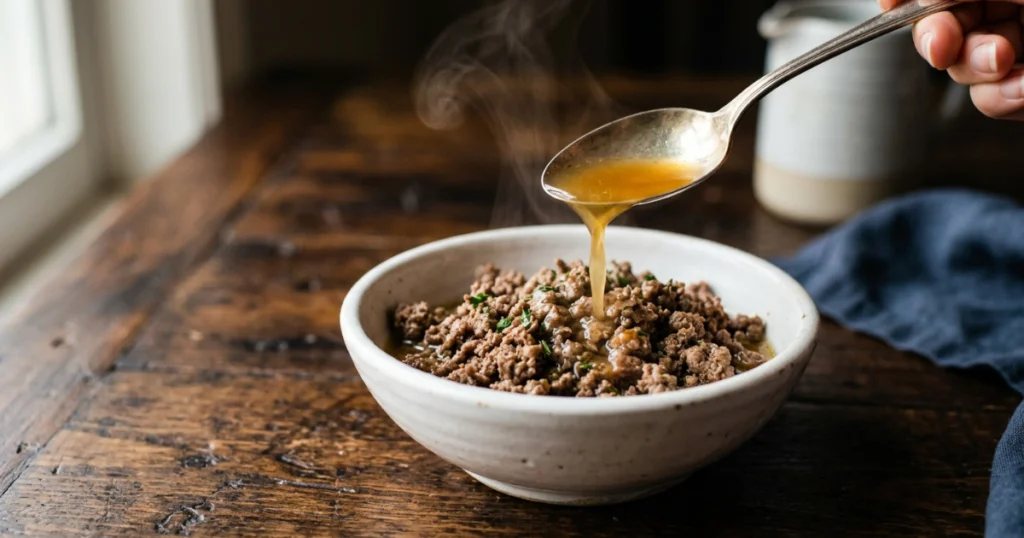
Prep: 5 mins | Cook: 10 mins | Makes: 2–3 servings
- 3 oz lean ground beef (90%+ lean)
- 2 tablespoons plain bone broth (no onion, no garlic, no salt — read the label)
- Brown beef until fully cooked, drain excess fat.
- Cool, then mix with bone broth before serving.
Cats are prone to urinary issues when they don’t drink enough water. The bone broth increases fluid intake without a fight. Use pet-specific bone broth or make your own from plain unseasoned bones.
Recipe 8: Chicken and Pea Soft Blend
Prep: 5 mins | Cook: 20 mins | Makes: 2–3 servings
- 1 boneless skinless chicken thigh
- 2 tablespoons frozen peas
- Boil chicken thigh for 20 minutes.
- Add frozen peas in the last 5 minutes.
- Drain, cool, then blend or mash to your cat’s preferred texture.
Ideal for older cats or cats with dental issues. The blended texture mirrors commercial pâté, which makes it an easier transition.
Recipe 9: White Fish and Sweet Potato Mash
Prep: 5 mins | Cook: 15 mins | Makes: 2 servings
- 3 oz white fish (cod, tilapia, or pollock)
- 1 tablespoon mashed sweet potato
- Steam or bake fish until fully cooked — no oil, no seasoning.
- Flake carefully, removing all bones.
- Mix with sweet potato and a splash of water if needed.
Key lesson: Keep sweet potato to one tablespoon maximum. The fish must be the star. When I used equal parts, Miso walked away. A tablespoon? She ate it fine.
Recipe 10: Mixed Protein Medley (Batch Cook Sunday)
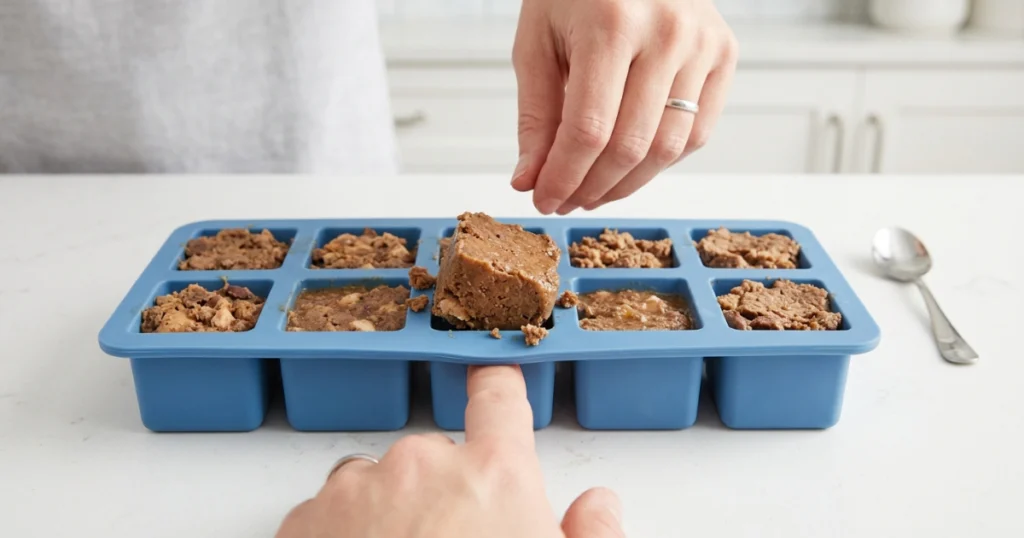
Prep: 10 mins | Cook: 20 mins | Makes: 7–8 servings
- 2 oz chicken breast, cooked and shredded
- 2 oz ground turkey, cooked
- 1 oz chicken livers, cooked and finely chopped
- ¼ cup low-sodium chicken broth
- Cook each protein separately using methods from recipes above.
- Combine all proteins, add broth and mix until moist.
- Portion into ice cube trays and freeze. Defrost one portion at a time.
The broadest nutritional variety of any recipe here. Make it once on Sunday, feed your cat the whole week.
How to Transition Your Cat to Homemade Food
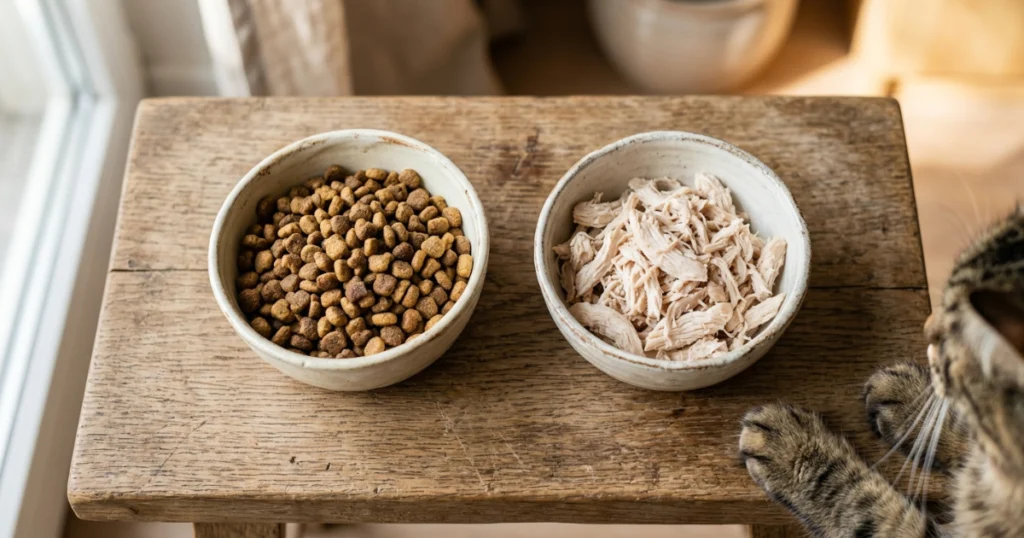
This is the step most guides skip — and the one that trips most people up. You can’t swap overnight. Most cats will reject it, and even accepting cats can get digestive upset from an abrupt change.
The schedule that worked for Miso:
- Days 1–3: 75% commercial, 25% homemade — mixed in the same bowl.
- Days 4–6: 50% commercial, 50% homemade.
- Days 7–9: 25% commercial, 75% homemade.
- Day 10+: Fully homemade, or your target long-term ratio.
If your cat refuses at any stage, slow down — go back a step for a few more days. Older cats and cats who’ve eaten the same food for years need more time. Miso took about two weeks because she’s suspicious of anything new, which is very on-brand for her.
Watch for: loose stools (normal for a few days, not if it continues), vomiting, appetite loss lasting more than 2 days, or lethargy. Any of those — call your vet.
Common Mistakes to Avoid
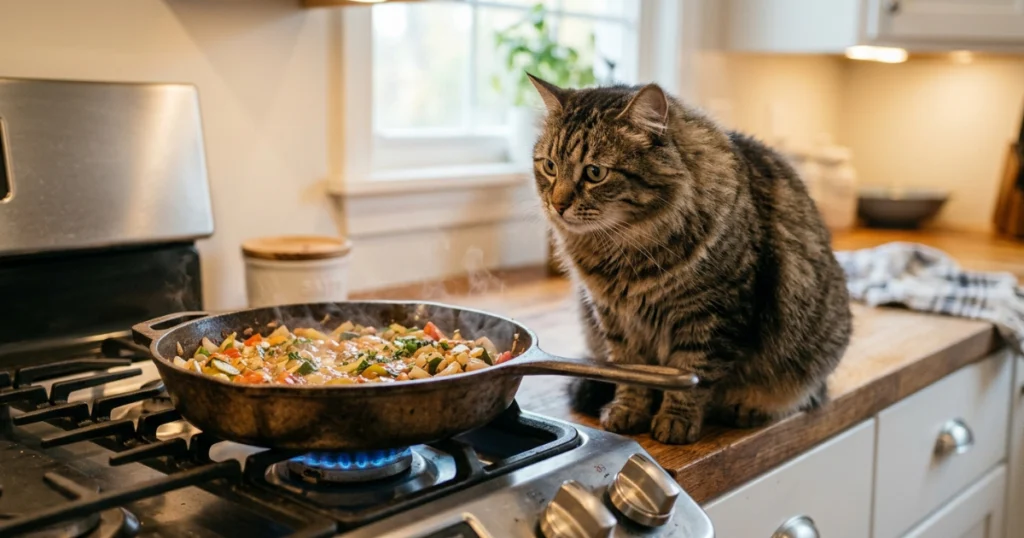
Using seasoned proteins. Everything must be plain. No garlic, no onion, no salt, no spices. I’ve repeated this because it’s the one that causes real harm.
Serving food too hot. Always let food cool fully before serving. Cats prefer food at roughly room temperature.
Not rotating proteins. Cats can develop food intolerances from eating the same protein daily. Rotate between chicken, turkey, fish, and beef.
Skipping taurine supplementation. If homemade food makes up a significant share of your cat’s diet, add a powdered taurine supplement. Cheap, tasteless, mixes in instantly.
Storing too long. 3 days in the fridge, 3 months in the freezer. Label your containers with dates — you think you’ll remember, and you won’t.
FAQs
Is homemade cat food actually healthier than commercial food?
It can be, especially with high-quality whole proteins and variety. But it’s not automatically healthier — it depends entirely on what you put in it. The real win is knowing exactly what’s in every meal.
Do I need to add supplements to homemade cat food?
Can kittens eat homemade food?
How much homemade food should I feed my cat?
Can I mix homemade food with commercial food?
What can I cook for my cat if I’m in a hurry?
Related: Not sure which commercial food to fall back on? See our roundup of the top 5 healthiest cat foods and the best food for indoor cats. Cooking for a Persian cat specifically? See our Blue Persian Cat guide.
A note on homemade diets: the American Veterinary Medical Association advises against feeding raw or undercooked animal-source protein to cats due to pathogen risks — make sure any homemade recipe is fully cooked and nutritionally balanced, ideally reviewed with your vet.